
Transporting pressurized gases across the European Union involves navigating a complex landscape of high-stakes logistics and stringent regulatory frameworks. Imagine a heavy-duty truck hauling a payload of industrial gas cylinders across the fluctuating temperatures and steep inclines of the Alps. In these demanding scenarios, safety and legal alignment are strictly non-negotiable for chemical distributors and healthcare providers alike.
A single mechanical failure in a high-pressure containment system can trigger catastrophic consequences. While heavy-duty seamless steel or aluminum vessels provide the primary storage, the entire system's integrity hinges on one specific component: the valve. Using non-compliant equipment often results in severe financial penalties, confiscated shipments at border crossings, and devastating industrial accidents. The definitive solution for operators is sourcing a fully certified TPED gas cylinder valve. This guide explores how these highly engineered components meet strict EU directives and details the strategic approach to selecting the right manufacturing partner.
To operate legally within the European industrial gas market, stakeholders must possess a thorough understanding of Directive 2010/35/EU. This legal framework, known as the Transportable Pressure Equipment Directive, strictly regulates the design, manufacturing, conformity assessment, and periodic testing of mobile gas containment systems across the European Economic Area.
The directive serves a dual purpose. It establishes a uniformly high level of safety for the transport of dangerous goods by road, rail, and inland waterways. Simultaneously, it guarantees the frictionless movement of compliant pressure equipment across all EU member states. By eliminating the logistical bottleneck of separate national certifications, cross-border transport becomes significantly more efficient.
The cornerstone of this regulatory adherence is the Pi (π) mark. Functioning similarly to the CE mark for general consumer goods, the Pi symbol is exclusively reserved for transportable pressure equipment. When stamped onto a valve body, it serves as an immutable legal declaration that the equipment has satisfied all mandatory conformity assessment procedures. Without this mark, equipment is effectively restricted from sale or transport within the EU.
In the engineering of pressurized containment, the weakest link principle dictates overall safety. A heavy-duty gas cylinder is only as secure as the mechanism that seals it. The valve acts as the primary interface between a highly pressurized internal environment and the external atmosphere.
During daily operations, these components endure severe environmental stressors. A cylinder might be accidentally bumped by a forklift in a warehouse, subjected to high-frequency road vibrations during transit, or exposed to freezing weather on a loading dock. If the valve experiences thread shearing or structural fatigue under these dynamic stresses, the escaping gas can transform a storage vessel into a highly destructive projectile.
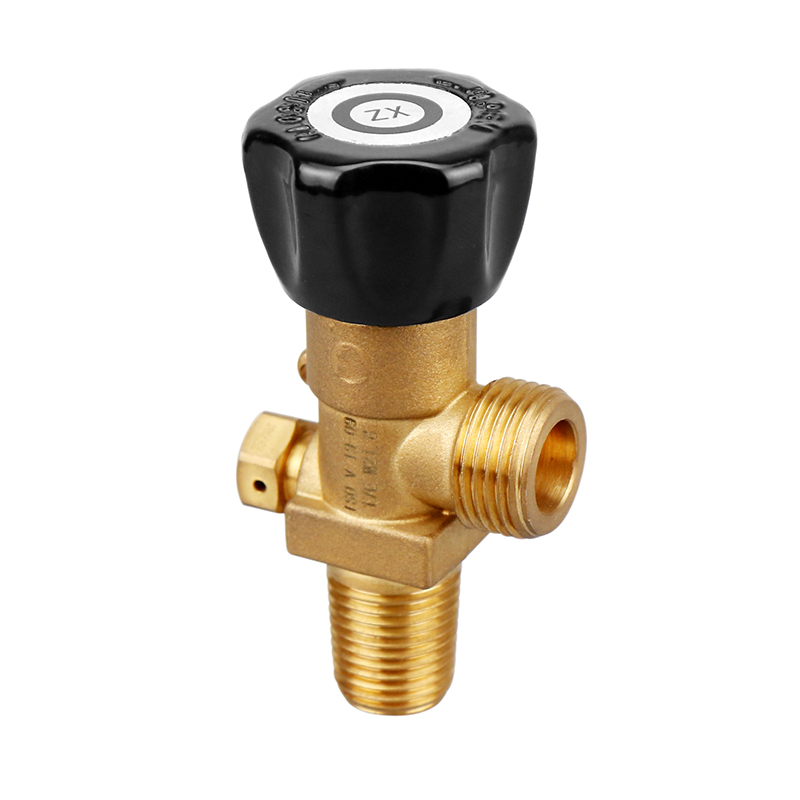
Specifically, compliant designs mitigate these risks through robust internal geometries and precision-machined threads. Furthermore, the directive mandates uncompromising traceability. Regulatory authorities must be able to trace any component back to its origin. Consequently, a compliant unit will feature permanent, legible markings stamped directly into the metal, including the manufacturer's identification, the testing standard applied, the production batch number, and the identification number of the overseeing Notified Body.
The foundation of a reliable containment mechanism lies in its material composition and the severity of the testing it endures before reaching the market. Regulatory compliance is never based on a manufacturer's self-declaration; it requires objective, empirical validation.
Metallurgical integrity is the first hurdle. Materials must withstand both the chemical nature of the contained gas and external environmental degradation. High-grade extruded brass alloys are frequently utilized for standard industrial gases due to their excellent machinability and resistance to stress corrosion cracking. In contrast, highly corrosive or specialty toxic gases mandate specialized stainless steel alloys to prevent hydrogen embrittlement over the equipment's lifespan.
To earn the right to display the Pi mark, prototype designs must survive a battery of extreme physical tests defined by harmonized standards like EN ISO 10297. Manufacturers must engage an authorized Notified Body, which acts as an independent third-party inspection agency accredited by an EU member state. These agencies conduct exhaustive audits of the factory's quality management systems and issue the final EU Type Examination Certificate.
The European industrial gas sector is currently undergoing a period of rapid evolution, driven by sustainability goals and digital transformation. TPED compliance is no longer just a static legal requirement, but a dynamic baseline that manufacturers must continuously build upon.
One major trend is the expansion of the green hydrogen economy. As hydrogen transit scales up across Europe to fuel industrial decarbonization, the pressure parameters for transportable vessels are being pushed to new extremes, often exceeding 300 to 500 bar. This shift necessitates a new generation of hyper-resilient valves. Simultaneously, Market Surveillance Authorities are intensifying spot checks at borders, utilizing digital databases to verify the authenticity of Notified Body certificates instantly.
Furthermore, the integration of RFID and smart-tracking technology directly into valve guards is gaining traction. While not yet explicitly mandated by TPED, major gas distributors are adopting these smart components to streamline lifecycle tracking and automate periodic inspection schedules. This ensures that every cylinder in their fleet maintains its legal compliance status in real-time.
Industrial applications require diverse flow control solutions. While the core safety parameters remain uniform under the directive, the mechanical architecture must adapt to the specific gas being handled. Below are the most common compliant solutions utilized in the European market.
The standard brass Handle Wheel Valve remains the workhorse of the industrial sector. Operated manually via a rotary handwheel, it utilizes a robust spindle and O-ring sealing mechanism to manage gas flow with precision. Its durability and ease of operation make it the preferred choice for standard applications involving oxygen, argon, helium, and mixed welding gases.
Inert gases present a different logistical challenge. They are frequently stored at exceptionally high pressures to maximize transport efficiency. Managing these forces requires a dedicated nitrogen cylinder valve. These specialized units feature reinforced wall thicknesses and advanced internal seat materials, such as high-density polymers or PCTFE, which resist deformation under extreme inert gas pressure. The thread pitch is optimized to handle rapid decompression safely, preventing micro-leaks during long-haul transit.
Maintaining the internal purity of a cylinder is another significant operational hurdle. To combat backflow contamination, the industry relies on the residual pressure valve. This highly specialized device incorporates an internal pneumatic cartridge that automatically seals shut when the internal pressure drops to a low threshold, typically 3 to 5 bar. By physically locking in a small amount of positive pressure, it creates an impenetrable barrier against external contaminants, reducing the need for expensive internal purging processes.
Attempting to bypass regulatory frameworks by utilizing counterfeit or non-certified components introduces catastrophic vulnerabilities to a business. Transporting pressurized equipment without the Pi mark is a direct violation of EU law. Companies caught doing so face crippling financial penalties. In the event of an accident causing property damage or human injury, the legal liability falls squarely on the distributor and the filler.
For procurement managers, selecting a manufacturing partner is a critical compliance decision. Never accept verbal assurances of compliance. Buyers must request the official EU Type Examination Certificate issued by a recognized Notified Body. It is essential to request physical product samples to verify that the Pi mark, the Notified Body identification number, and the manufacturing traceability codes are permanently and deeply stamped into the metal.
A reliable supplier operates under strict quality control frameworks. Ensure the manufacturer holds an active ISO 9001:2015 certification. The most reputable factories maintain advanced in-house testing laboratories equipped to perform continuous batch testing for helium leak detection and high-cycle endurance. This internal capability guarantees that mass-produced units precisely match the approved prototype.
Securing a certified valve is far more than a regulatory checkbox; it is a fundamental investment in operational safety and seamless market access within the European Union. The right equipment protects your product purity, safeguards transport personnel, and secures your bottom line against crippling legal penalties.
Whether your fleet requires standard brass fittings or advanced residual pressure systems for ultra-high purity applications, maintaining strict alignment with Directive 2010/35/EU is essential. Audit your current cylinder fleet for compliance today, and proactively reach out to a certified manufacturing partner to upgrade your containment systems for the future.
It is the official regulatory marking proving the component has been rigorously tested, certified, and approved by an independent Notified Body to meet the EU's Transportable Pressure Equipment Directive. It acts as a legal passport, guaranteeing the item is permitted for transport across all EU member states.
No. If the vessel is being transported across public roads, railways, or borders within the EU, both the main cylinder body and the attached valve must be fully certified. Utilizing non-certified equipment for public transport directly violates European law and subjects the operator to severe fines.
By preventing the cylinder from fully emptying, this specialized valve keeps external moisture and atmospheric contaminants from entering the vessel. This eliminates the labor-intensive and expensive need for internal cylinder purging, vacuuming, and cleaning processes before the next refill, significantly extending the operational lifespan of the asset.
PED (Pressure Equipment Directive) applies strictly to stationary pressure equipment, such as factory boilers, fixed storage tanks, and industrial facility piping. TPED (Transportable Pressure Equipment Directive) applies specifically to mobile equipment, like gas cylinders and their associated valves, that are moved across public infrastructure.
While highly versatile and structurally durable, specific material compatibility depends on the chemical nature of the gas. Brass is excellent for oxygen, argon, and nitrogen due to its natural resistance to sparking and oxidation. However, highly corrosive or toxic chemicals generally require stainless steel construction or specialized internal coatings to prevent rapid material degradation.


