
Choosing the right oxygen storage solution goes far beyond simple material preference. Facility managers know this is a highly strategic decision. It deeply impacts operational budgets, staff ergonomics, and daily patient mobility. The optimal medical cylinder depends entirely on the specific clinical or transport environment where it operates. Hospital wards, emergency medical services (EMS), homecare settings, and specialized MRI suites each demand completely distinct safety specifications. Mixing equipment blindly often leads to severe compliance failures and fatal safety hazards. We set an objective, evidence-based tone right here. Buyers need clear guidance on durability, regulatory compliance, and safety criteria without any marketing hyperbole. You will learn exactly how to weigh upfront expenses against long-term maintenance needs. We will help you align your equipment choices with real-world healthcare demands.
Steel offers superior durability and a lower upfront cost, making it ideal for stationary use and budget-conscious bulk procurement.
Aluminum provides significant weight reduction and corrosion resistance, essential for ambulatory care, EMS transport, and patient homecare.
MRI Compatibility: Aluminum is non-magnetic and safe for MRI environments, a hard requirement for specific hospital departments.
Total Cost of Ownership (TCO): Aluminum’s higher initial price is often offset by lower maintenance costs (no internal rust) and reduced staff injury risks over a 5–10 year lifecycle.
Identifying what makes a procurement choice successful is your very first step. A winning strategy meets local regulatory compliance effortlessly. It also minimizes replacement frequency and reduces daily staff fatigue. Procurement teams must look past the initial invoice. They need to understand how the equipment behaves in the real world. Implementation realities often complicate this choice significantly. Mixing fleets of steel and aluminum requires distinct tracking methods. You must maintain separate maintenance protocols for each material. Hydrostatic testing schedules also diverge based on the metal type. Managing a mixed fleet increases the administrative burden on your compliance officers.
Facility managers must also address the real risk of over-specifying. You do not want to pay premium prices for ultra-lightweight units destined to sit under stationary hospital beds. Conversely, under-specifying creates massive operational headaches. Buying heavy steel for high-mobility EMT units slows down emergency responses. It drains the physical energy of your first responders. You must evaluate the operational environment thoroughly before issuing any purchase orders. Every department has unique demands. Understanding these demands ensures your investment delivers true clinical value.
Traditional steel units represent the baseline standard, often referred to as Type 1 vessels. These solid metal vessels have served the global healthcare industry reliably for decades. They boast incredibly high tensile strength. This inherent toughness makes them highly resistant to external damage. They withstand drops, collisions, and rough handling easily. You often see them thrive in industrial-adjacent environments or high-traffic clinical settings where impacts are common. Furthermore, they offer a significantly lower initial capital expenditure. If you need immediate, large-scale deployment across multiple facilities, steel remains highly cost-effective.
However, you must acknowledge their severe limitations in modern care. The primary burden is their massive weight. Moving heavy steel creates a measurable ergonomic strain on healthcare workers. Nurses and technicians face increased risks of back injuries. Patients also struggle to transport these heavier units around their homes. Additionally, steel suffers from high corrosion vulnerability. If exposed to internal moisture during refilling, it risks severe oxidation and rust. This flaw requires strict, meticulous valve management to prevent contamination. Rust particulates can easily clog delicate respiratory regulators. Finally, steel poses an extreme magnetic danger. You must never bring these units into MRI or radiology environments. The magnetic pull of the imaging equipment turns heavy steel into a lethal projectile.
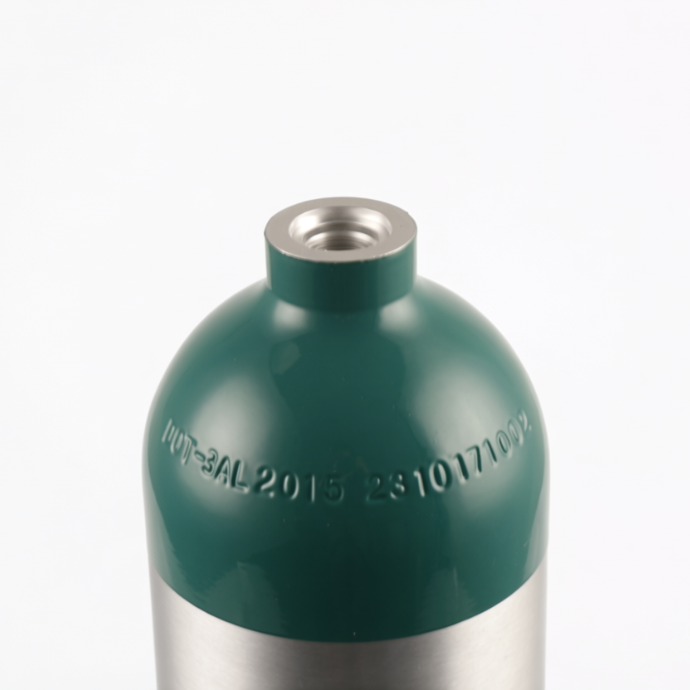
The healthcare sector has seen a massive shift toward aluminum for portable oxygen storage. It now stands as the modern standard for ambulatory and emergency needs. The lightweight advantage is absolutely undeniable. Aluminum units are up to 30% to 40% lighter than their steel counterparts. We see this driving much higher patient compliance in homecare settings. Elderly patients can manage lighter units on stairs and during travel. It also guarantees faster EMS response times. EMTs can carry these units up multiple flights of stairs without excessive fatigue.
Another major benefit is its superior corrosion resistance. Aluminum oxidizes quite differently than steel. It forms a hard, protective oxide layer rather than flaking into rust. This prevents internal debris from compromising valve integrity or gas purity. Furthermore, a high-quality medical cylinder made of aluminum is MRI-safe. Non-magnetic properties are a mandatory compliance feature for modern imaging departments.
Despite these distinct benefits, implementation carries some specific risks. The initial cost factor is undeniably higher. Buyers must secure larger upfront budgets to equip their teams. Surface wear is another minor but notable drawback. While structurally sound, aluminum shows external aesthetic wear much faster. Scratches, gouges, and dents appear more easily than on hardened steel. You might need to invest in protective sleeves to maintain a professional appearance.
We must evaluate these materials across critical operational metrics. Let us compare standard sizes, such as the popular E-cylinder format. Mapping specific weight differences directly highlights user fatigue issues and logistical hurdles. A standard steel E-cylinder typically weighs over 14 pounds when completely empty. Its aluminum equivalent weighs roughly 7.5 pounds. This massive gap transforms daily transport logistics completely. When a nurse moves ten units per shift, that weight difference compounds dramatically.
Next, we contrast their distinct maintenance lifecycles. Both materials require mandatory regular hydrostatic testing. Regulatory bodies like the DOT or ISO mandate these high-pressure safety checks. Inspectors use water jackets to measure structural expansion under extreme pressure. Steel often requires testing every 5 to 10 years, depending on the specific alloy and local laws. Aluminum generally follows a strict 5-year testing interval. Failing these tests results in immediate condemnation of the vessel.
Financial evaluation moves far beyond the sticker price. You must build a comprehensive framework factoring in long-term replacement rates. Calculate the routine maintenance expenses over a decade. Factor in potential worker compensation claims due to heavy lifting injuries. Heavy equipment directly correlates with higher staff injury rates. The long-term financial picture often shifts favor toward lighter materials. Their premium upfront price tag pays dividends through reduced liability and longer service life.
The following chart illustrates the primary differences across key operational metrics.
| Evaluation Metric | Steel Option | Aluminum Option |
|---|---|---|
| Average Empty Weight (E-Size) | ~14.5 lbs | ~7.5 lbs |
| Corrosion Resistance | Low (Prone to internal rust) | High (Protective oxidation) |
| MRI Environment Safety | Unsafe (Severe magnetic risk) | Safe (Non-magnetic properties) |
| Initial Procurement Expense | Lower | Higher |
| Surface Durability | High (Resists scratching) | Moderate (Prone to dents) |
Innovation in the respiratory sector extends far beyond standard Type 1 solid metal vessels. We now see Type 2 and Type 3 options aggressively entering the specialized market. Type 2 units utilize a standard metal liner but reinforce it with a fiberglass hoop wrap. Type 3 vessels feature a fully wrapped carbon composite exterior over a thin aluminum liner.
We position these advanced composites as the ultra-premium tier. They shed even more weight than standard aluminum, offering unparalleled portability. However, their manufacturing complexity pushes their cost substantially higher than traditional options.
You should align these specific vessels only with highly specialized use cases. We recommend composites for extreme-mobility requirements. Specific aviation medicine relies heavily on them to reduce aircraft payload weight. Specialized mountain rescue teams also utilize their ultra-lightweight profile for long-distance foot ascents. Their stringent inspection protocols make them impractical for standard hospital wards. The carbon fiber exterior is highly susceptible to impact damage. A minor drop that merely scratches an aluminum unit might critically compromise a carbon composite wrap. Therefore, reserve them strictly for elite transport teams.
Developing a clear shortlisting logic simplifies your entire procurement process. Use this strategic decision matrix to guide your buying strategy effectively.
Choose Steel if: The unit will remain completely stationary. You face extremely strict budget constraints. MRI exposure is absolutely impossible in your environment.
Choose Aluminum if: You supply EMS or patient transport teams. The unit serves patient homecare. Staff will use it near magnetic imaging equipment.
Successful rollout requires careful standardization across your entire respiratory program. We strongly advise standardizing valve types across your chosen material fleet. Implementing universal CGA 870 pin-index valves simplifies staff training immensely. It ensures anyone can connect a regulator in an emergency. Standard regulators prevent mismatched equipment emergencies during critical patient care. When staff panic, uniform equipment saves valuable seconds.
Follow these necessary steps before finalizing your bulk order or drafting an RFP:
Audit your current inventory for frequent fail-rates and localized damage.
Conduct a targeted ergonomic assessment with your daily nursing staff.
Standardize your valve and regulator specifications across all departments.
Issue an RFP detailing your precise weight and magnetic safety requirements.
Taking these steps guarantees you invest in the right medical cylinder for your specific clinical needs. Skipping this audit phase often leads to expensive restocking fees and frustrated clinical staff.
Our final verdict is quite simple. Neither material is universally better in every single scenario. The correct choice depends entirely on your exact operational use-case. A stationary bedside setup benefits greatly from heavy, durable metal. Fast-moving ambulatory teams require lightweight agility above all else.
We want to reinforce a critical credibility check. Prioritizing patient safety and staff ergonomics always yields the best long-term value. Reduced lifting injuries protect your workforce and your operational budget simultaneously. Equipment that nurses can easily maneuver translates directly to better patient care.
Take immediate action today to improve your respiratory fleet. Request a comprehensive fleet audit from your current supplier. Download a standardized procurement checklist to guide your next committee meeting. Contact a respiratory specialist to analyze your long-term maintenance projections and safety requirements.
A: Both materials can technically last for decades if properly maintained. Regulatory limits and hydrostatic test pass rates dictate their practical lifespan. Steel units often survive 20 to 30 years in stationary environments. Aluminum units generally last 15 to 20 years. Constant handling, denting, or failing a mandatory hydrostatic pressure test will immediately retire either material.
A: Aluminum itself is non-magnetic. However, you must verify the terminology carefully. Look for "MR Conditional" or "MR Safe" labels. The vessel is only safe if paired with a certified non-magnetic valve and regulator. A standard steel valve on an aluminum body creates a lethal projectile risk near imaging equipment.
A: Testing frequency depends heavily on geographic regulations and specific materials. In the United States, the DOT generally requires hydrostatic testing every 5 years for aluminum. Some steel alloys may qualify for a 10-year testing interval. Always verify local ISO or DOT guidelines to ensure strict compliance and prevent safety violations.
A: Yes, provided the valve interfaces match perfectly. The industry standard CGA 870 post valve fits seamlessly on both materials. You must ensure the regulator matches the specific gas and valve type. However, never use standard regulators in an MRI suite, even on an aluminum body. Always use specialized non-magnetic fittings.


