
Compressed gas cylinder valves act as the primary fail-safe between high-pressure containment and the operational environment. Specifying the wrong valve type introduces severe risks on the floor. You might face micro-leaks, rapid depressurization, or complete containment failure. These errors cause facility downtime and violate strict industrial safety mandates. To stop these hazards, operations need a rigorous procurement framework. Standardizing on the correct Handle Wheel Valve configuration eliminates compatibility guesswork. It ensures regulatory compliance and keeps your gas delivery systems running safely. We will break down the mechanics, application specifics, and compliance standards required to make the right engineering choice for your facility.
Operational Ergonomics: Handle wheel valves provide immediate, tool-free flow control, critical for rapid shutoff in emergency scenarios compared to wrench-operated alternatives.
Strict Compliance Mandates: Adherence to CGA V-9 standards is non-negotiable for ensuring valve integrity, thread compatibility, and pressure relief device (PRD) reliability.
Application Specificity: High-pressure and multi-gas environments require distinct internal geometries, seal technologies, and material compositions (e.g., brass vs. stainless steel) to prevent chemical degradation.
Defining the baseline success criteria for gas containment is mandatory before evaluating any hardware. Zero leakage under maximum working pressure is the absolute standard. The valve must deliver reliable actuation over thousands of cycles without degrading the internal seals. Containment failure is not an option in industrial settings, especially when handling toxic or flammable materials. You must understand the internal mechanics to make informed procurement choices and troubleshoot field issues effectively.
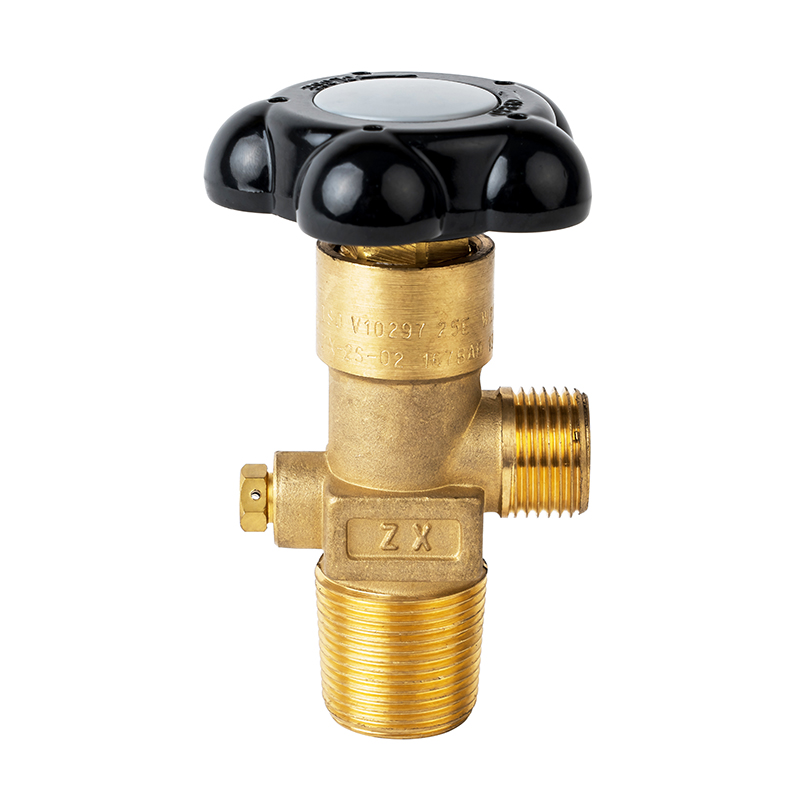
The structural breakdown of a standard cylinder valve reveals several highly engineered components working in unison. The inlet threads, typically National Gas Taper (NGT) or Unified National Fine (UNF), connect the valve securely to the cylinder neck. The outlet threads interface directly with the delivery system or regulator, following specific Compressed Gas Association (CGA) standards to prevent cross-connection. The forged valve body houses all internal mechanisms safely, providing the structural integrity needed to withstand pressures exceeding 3,000 PSI.
Inside the body, the stem and seat control the actual gas flow. When you turn the handle, the stem moves linearly to lift off the seat, allowing gas to pass. Packing materials or diaphragm seals prevent gas from escaping upward around the stem during operation. The pressure relief device (PRD) sits on the side or rear of the valve body, designed to vent gas safely if the cylinder over-pressurizes due to heat exposure. The handle wheel itself provides a distinct mechanical advantage. It translates rotational force from the operator's hand into precise linear stem movement, allowing for highly controlled gas release without requiring external leverage.
The mechanical sequence of actuation follows a specific path:
The operator applies rotational force to the handle wheel.
The internal stem threads engage, converting rotation into upward linear motion.
The lower stem lifts the polymer seat away from the machined brass or steel orifice.
High-pressure gas flows from the cylinder through the inlet, past the open seat, and out through the CGA outlet connection.
The stem seals (O-rings or packing) compress against the valve bonnet to keep gas from leaking out of the top of the valve.
Primary seal designs vary significantly by application and gas type. O-ring designs use elastomeric rings seated in machined grooves on the stem. They serve standard industrial needs effectively, providing reliable dynamic sealing for inert gases like nitrogen and argon. Packed designs utilize stacked rings of PTFE (Teflon) compressed by a gland nut. As you tighten the nut, the PTFE expands outward against the valve body and inward against the stem, creating a tight seal. Packed valves are common in applications where O-rings might degrade chemically.
Diaphragm valves represent a completely different engineering approach. They are mandatory for ultra-high-purity (UHP) applications and highly toxic gas containment. Instead of a dynamic seal that rubs against a moving stem, a diaphragm valve uses a flexible metal disc (usually Elgiloy or stainless steel) clamped permanently between the valve body and the bonnet. The stem pushes down on the diaphragm to close the seat, meaning there is no friction path for gas to escape. The seal design directly impacts overall leak rates, dictates the expected cycle life of the unit, and determines your required maintenance intervals.
Field operators frequently compare the handle wheel gas cylinder valve against wrench-operated alternatives. Handle wheels offer superior accessibility and speed. Operators can close them rapidly without searching for external tools, which is a massive advantage during emergency shutoff procedures. The ergonomic design allows for precise throttling of the gas flow.
Wrench-operated toggle or key valves provide a compact profile. They offer tamper resistance in unsecured public areas or high-traffic industrial zones where accidental bumping could open a handle wheel. However, if an operator loses the specific wrench required for actuation, the cylinder becomes useless. You must evaluate this trade-off carefully based on the specific operational environment, emergency response protocols, and security requirements of your facility.
You must map specific valve architectures to their intended applications. Industrial, medical, and specialty gases require unique internal configurations. A valve designed for inert argon will fail catastrophically if used in a highly corrosive chlorine application.
Facilities handling diverse gas portfolios face complex requirements. They manage inert gases, oxidizers, and flammable mixtures daily. Selecting a reliable multi gas cylinder valve requires careful material science evaluation. Broad-spectrum corrosion resistance is absolutely essential to prevent the internal components from degrading when exposed to different chemical compounds. Universal seat compatibility prevents premature mechanical failure across various pressure ranges.
You must match elastomer materials to specific gas mixtures. Common elastomers include Viton, Buna-N, and EPDM. Proper matching prevents swelling, embrittlement, and chemical breakdown over time. For example, EPDM offers excellent resistance to ammonia but degrades quickly when exposed to hydrocarbon-based gases. Viton handles hydrocarbons well but fails in ammonia service. A true multi-gas configuration often relies on highly inert materials like PTFE or PCTFE for the seat and specialized perfluoroelastomers (FFKM) for the O-rings to ensure broad compatibility.
Carbon dioxide containment presents unique physical challenges that destroy standard valves. CO2 is stored as a liquid under pressure. When the valve opens, phase changes from liquid to gas occur rapidly during discharge. This expansion absorbs massive amounts of heat from the surrounding environment, causing extreme thermal drops due to the Joule-Thomson effect. The valve body can quickly drop to temperatures well below freezing, causing atmospheric moisture to condense and form solid ice on the exterior.
A compliant high pressure co2 cylinder valve requires specific engineering to survive this thermal shock. Standard O-rings will harden, shrink, and leak at these low temperatures. Therefore, CO2 valves utilize specialized cold-resistant elastomers or spring-energized PTFE seals. Furthermore, CO2 cylinders require specific burst disc configurations (typically a CG-1 rupture disk) rated for the exact expansion pressure of the gas. Robust non-rotating stem designs are necessary to prevent internal freezing from locking the mechanism in the open position. Freezing leads directly to seal failure and rapid, uncontrollable gas loss.
Oxygen service requires highly specific engineering controls and strict handling procedures. Oxygen itself is not flammable, but it violently accelerates combustion. Stringent cleaning protocols are mandatory before deployment. CGA G-4.1 standards dictate the removal of all hydrocarbon contaminants, including machining oils, grease, and even fingerprints. Even trace hydrocarbons can ignite under high pressure in an oxygen-enriched environment.
The primary hazard in oxygen systems is adiabatic compression. If an operator opens the valve too quickly, the high-pressure oxygen rushes into the dead space of the attached regulator. The gas compresses instantly, generating temperatures that can exceed 1,000°F in milliseconds. If any particulate matter or hydrocarbon residue is present, this heat will cause an explosion. Valve internal geometry must minimize friction during operation and feature slow-opening designs to reduce heat generation during actuation.
Establish industry-standard evaluation lenses for safety. Regulatory adherence must dictate all procurement choices. Relying on uncertified hardware exposes your facility to massive liability, equipment damage, and severe personnel hazards.
The Compressed Gas Association V-9 standard is highly comprehensive. It mandates strict rules for valve design, material selection, and physical testing. Manufacturers must subject their designs to rigorous cycle testing, proving the valve can open and close thousands of times without exceeding allowable leak rates. The standard also dictates performance metrics under extreme environmental conditions, including high-temperature bakes and sub-zero freezing tests.
Specifying a certified cga v9 cylinder valve protects organizations from liability. It ensures seamless interoperability with standard regulators and manifolds. It also guarantees compatibility with automated filling equipment at the gas supplier's facility. A V-9 certified valve has passed hydrostatic burst testing, proving the forged body will not fracture even if cylinder pressures spike well beyond normal operating limits.
PRDs integrate directly into the main valve body to prevent the cylinder from exploding if exposed to fire or extreme heat. The selection of the PRD is dictated by CGA S-1.1 guidelines and must align perfectly with the gas properties and the specific cylinder rating.
| PRD Type (CGA Designation) | Mechanism | Primary Application | Activation Trigger |
|---|---|---|---|
| CG-1 | Rupture Disk | High-pressure inert gases, Oxygen, CO2 | Over-pressurization |
| CG-2 | Fusible Plug (165°F) | Low-pressure toxic or corrosive gases | Heat exposure (Melts at 165°F) |
| CG-3 | Fusible Plug (212°F) | Specific low-pressure specialty gases | Heat exposure (Melts at 212°F) |
| CG-4 | Combination (Disk + Plug) | Medical oxygen, specific high-pressure mixes | Heat AND Over-pressurization |
| CG-5 | Combination (Disk + Plug) | Hydrogen, highly flammable high-pressure gases | Heat AND Over-pressurization |
Using the wrong PRD is incredibly dangerous. For example, installing a CG-2 fusible plug on a high-pressure nitrogen cylinder would result in the plug blowing out under normal pressure, emptying the cylinder instantly. Always verify the PRD matches the stamped service pressure on the cylinder crown.
Lot tracking and heat numbers are critical for safety and lifecycle management. Permanent manufacturer markings on the valve body are required by law. These markings typically include the manufacturer's logo, the CGA outlet number, the working pressure rating, and a date code or lot number.
These markings enable effective lifecycle management across the fleet. If a manufacturer discovers a machining defect in a specific batch of brass, traceability allows you to locate and isolate the affected valves immediately. Traceability is vital for rapid recall mitigation. It also simplifies mandatory safety audits and compliance reporting for OSHA and the DOT.
Translate technical specifications into long-term operational outcomes. Buying the cheapest valve on the market often results in massive secondary costs due to leaks, premature failures, and production downtime.
Evaluate the physical properties of the valve body material. Forged brass (typically alloy C37700) is the industry standard for inert gases, oxygen, and nitrogen. It is highly malleable, resists cracking under pressure, and is relatively easy to machine. However, brass degrades quickly when exposed to ammonia, chlorine, or hydrogen sulfide.
Stainless steel (316L) is mandatory for corrosive and high-purity gases. It resists chemical attack and does not off-gas contaminants into the gas stream. However, stainless steel is harder to machine and prone to thread galling if not properly lubricated with compatible compounds.
Seat materials significantly impact cycle life and leak integrity. The seat takes the brunt of the mechanical force every time the operator closes the valve.
| Seat Material | Characteristics | Best For |
|---|---|---|
| PCTFE (Kel-F) | High compressive strength, excellent chemical resistance, does not cold flow. | High-pressure industrial gases, Oxygen, UHP applications. |
| PTFE (Teflon) | Superior chemical inertness, low friction, but prone to cold flow under high torque. | Corrosive gases, lower pressure applications. |
| PA (Nylon) | Very tough, resists physical damage from debris, absorbs moisture. | Rough service, construction sites, non-critical inert gases. |
Standardizing valve models across a fleet offers major logistical benefits. If you operate 5,000 cylinders, having 15 different valve models creates a maintenance nightmare. Standardization drastically reduces inventory complexity for replacement parts like O-rings, handwheels, and PRD caps.
Standardization simplifies operator training across different facility zones. When every valve operates with the same torque requirements and visual indicators, you reduce handling errors during cylinder changeouts. It also allows you to standardize your regulator fleet, ensuring seamless connections without requiring dozens of different adapters.
Assess manufacturer capabilities carefully before committing to a supplier. Look for verifiable ISO 9001 certification to ensure they have documented quality control processes. Demand rigorous factory acceptance testing (FAT) documentation for every batch of valves delivered.
The ability to provide custom configurations is crucial. You may need specific dip tube lengths for liquid withdrawal or custom PRD ratings for older cylinders. Reliable lead times ensure continuous operational continuity. A supplier who cannot deliver replacement valves during a supply chain disruption will force you to ground your cylinder fleet.
Address practical implementation realities in the field. Field failures often stem from preventable operational errors rather than manufacturing defects. You must train your personnel to handle these high-pressure components correctly.
Mismatched CGA outlet connections pose severe safety risks. Operators sometimes attempt to force a CGA 580 regulator onto a CGA 320 valve using wrenches. This destroys the brass threads and can easily lead to catastrophic blow-outs when the cylinder is opened. Severe high-pressure leaks are also common when threads are damaged.
Implement strict visual inspection protocols before every connection. Operators must check the threads for burrs, flattened peaks, or debris. Utilize go/no-go thread gauges in the maintenance shop to verify integrity during requalification. Enforce rigorous procurement checklists to ensure the correct CGA connections are ordered for the specific gas type.
Operators frequently over-torque manual valves. When a valve develops a slight leak, the natural instinct is to crank the handle wheel down as hard as possible. Some operators even use "cheater bars" or wrenches on the handwheel to gain leverage. This leads to premature seat deformation. The PCTFE or Nylon seat gets crushed into the brass orifice, permanently destroying its ability to seal.
Specify valves with built-in torque-limiting features or non-rotating stem designs. A non-rotating stem moves straight up and down without spinning against the seat, which prevents galling and extends seat life dramatically. Implement targeted operator training on proper closing force. A properly functioning valve only requires firm hand pressure to achieve a zero-leak seal.
Rapid opening of oxygen valves creates severe ignition risks. As discussed earlier, adiabatic compression generates intense internal heat instantly. If an operator yanks the handle wheel open, the pressure spike will destroy the regulator and potentially cause a metal fire.
Train operators strictly on the "crack and open slowly" technique. The operator should stand to the side of the regulator, slowly crack the valve open to allow pressure to equalize, and then open it fully. Specify valves engineered with slow-opening internal geometries, which physically restrict the initial flow rate even if the operator turns the wheel quickly.
Harsh industrial environments degrade brass and steel valves quickly. Corrosive atmospheres in chemical plants and extreme temperatures in outdoor storage yards cause rapid damage. Airborne debris, sand, and grinding dust can foul exposed threads and enter the valve body.
Utilize protective valve caps during all transport phases and whenever the cylinder is not in use. Specify appropriate environmental plating like chrome or nickel for valves deployed in highly corrosive areas. Establish routine visual maintenance schedules to check for green oxidation on brass or pitting on stainless steel.
Routine leak detection is necessary prior to transport and after every connection. Use approved liquid leak detectors (snoop) on all connections, including the cylinder neck thread, the PRD, the stem seal, and the outlet connection. Ultrasonic testing provides advanced detection for micro-leaks in noisy industrial environments.
Establish clear, documented maintenance protocols. Determine when a valve can be safely rebuilt. Replacing O-rings and seats is standard practice for high-end valves, provided the brass body is undamaged. Define strict criteria for when it must be entirely scrapped. Any sign of thread damage, body distortion, or fire exposure means the valve must be destroyed and discarded immediately.
Selecting the correct compressed gas cylinder valve is a critical engineering decision. It dictates the safety and efficiency of the entire gas delivery system. Buyers must align their choice based on gas compatibility and pressure requirements. Strict adherence to CGA V-9 standards is non-negotiable for protecting personnel and equipment. Take the following actions to secure your gas delivery systems:
Audit your current cylinder fleet to identify non-compliant, aging, or improperly specified valves.
Download a technical specification sheet for your specific gas applications to verify material compatibility.
Implement a standardized operator training program focusing on proper actuation techniques and torque limits.
Contact a valve engineering specialist to request a quote for compliant replacements and fleet standardization.
A: It provides manual flow control and acts as the primary isolation point for compressed gases. It allows operators to safely start or stop gas flow without requiring external tools. It also houses integrated pressure relief devices to prevent catastrophic cylinder over-pressurization during fire or extreme heat exposure.
A: A certified valve undergoes rigorous testing mandated by the Compressed Gas Association. It guarantees standardized thread dimensions, material compatibility, and specific safety performance metrics like hydrostatic burst strength. Non-certified valves lack these verifiable safety assurances and may fail catastrophically under industrial pressure loads.
A: No. You must use a dedicated high-pressure CO2 valve. CO2 undergoes rapid phase changes from liquid to gas that cause extreme temperature drops. Standard valves will freeze, leading to seal failure and rapid gas loss. Dedicated valves feature specific burst discs and temperature-resistant elastomers.
A: These valves utilize highly inert construction materials and specialized seat polymers like PCTFE. They offer broad-spectrum corrosion resistance across various chemical families. The internal elastomer seals are carefully selected to resist swelling, embrittlement, and chemical breakdown when exposed to different industrial gas mixtures.
A: Operators must perform a visual inspection for thread damage and leaks before every use. Formal hydrostatic testing and internal inspection occur during mandatory cylinder requalification cycles. Valves should be replaced based on their rated cycle life, or immediately if physical damage is detected.
A: Handle wheels offer immediate, tool-free access. This allows for rapid shutoff during emergencies, minimizing gas loss and safety hazards. Wrench-operated valves require a separate tool, which slows response time, though they do provide a more compact and tamper-proof profile for unsecured locations.
A: Certified technicians can rebuild certain soft goods, like seats, packing rings, and O-rings, if the forged valve body is perfectly intact. However, any physical damage to the brass or steel body, damaged threads, or exposure to fire requires complete valve replacement to maintain safety standards.


