
For commercial operations ranging from busy breweries to industrial agriculture, a reliable gas supply forms a critical baseline. Restaurants rely on it for active soda fountains. Breweries need it to carbonate craft beer. Aquatics centers use it for precise water pH balancing. Keeping this gas flowing ensures you serve perfect products and maintain thriving environments. However, many business owners severely underestimate the hidden complexity of this supply chain.
Incorrect sizing, improper gas grading, or mismanaged maintenance schedules often lead to unexpected downtime. These routine mistakes also introduce compromised product quality and serious regulatory compliance risks. You need a clear strategy to manage these pressurized assets effectively. This guide provides a transparent, evidence-based framework for evaluating and sourcing a commercial CO₂ Cylinder infrastructure. You will learn how to accurately size your gas supply, verify legal purity standards, and navigate vendor logistics. We also break down essential safety protocols to ensure cost-efficiency and operational safety across your facilities.
Sizing dictates workflow: Match cylinder capacity (e.g., 20 lb vs. 50 lb) strictly to your daily consumption rates to minimize delivery fees and swap frequencies.
Application determines grade: Food and beverage operations must legally and functionally require 99.9% purity "Beverage Grade" CO₂ to prevent contamination.
Safety is regulated: Commercial setups must adhere to strict OSHA/local storage regulations, including chain restraints and ambient CO₂ monitoring.
Calculate your exact consumption rate before selecting a tank size. Throughput benchmarking prevents emergency weekend refills. It also stops you from overpaying for unnecessarily large deliveries. For beverage dispensing, map the ratio of gas pounds to kegs served. A standard industry rule dictates you need about half a pound of gas to dispense one standard 1/2 BBL keg. Track your weekly keg turnover closely. This metric estimates your raw gas requirements accurately.
Commercial setups generally rely on three standard footprints. Evaluate these options against your actual daily volume.
| Cylinder Size | Typical Application | Est. 1/2 BBL Kegs Dispensed | Weight (Full) |
|---|---|---|---|
| 20 lb | Mobile catering, under-counter bars, small cafes | 30 - 40 kegs | ~50 lbs |
| 50 lb | High-volume bars, mid-sized breweries, aquatics | 80 - 100 kegs | ~120-130 lbs |
| Micro-Bulk | Industrial operations, massive concert venues | 400+ kegs | Varies (Fixed Installation) |
You must also account for space and ergonomic constraints. Evaluate the physical dimensions of the tank inside your storage cooler. A 50 lb tank stands quite tall and commands a larger floor footprint. Remember employee safety above all else. A full 50 lb tank weighs over 120 pounds. You must respect OSHA lifting limits when staff manage change-outs. If your team cannot safely maneuver heavy tanks, consider grouping multiple 20 lb tanks instead. This adjustment reduces strain and prevents workplace injuries.
Common Mistake: Many new restaurant owners order bulk systems prematurely. They assume bigger is automatically better. Oversizing your system ties up floor space and increases upfront deposit costs. Always start by calculating your actual throughput.
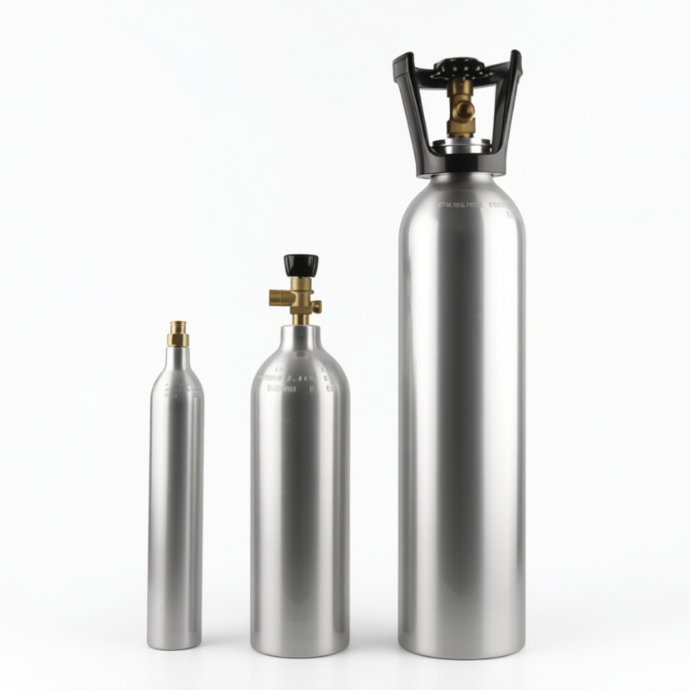
Define what constitutes "Beverage Grade" gas before signing any supplier contract. The International Society of Beverage Technologists (ISBT) strictly regulates these purity standards. Beverage grade gas must hit a strict 99.9% purity threshold. The remaining 0.1% matters deeply for food safety. This tiny margin ensures volatile hydrocarbons do not enter your product stream.
Industrial grade gas carries massive operational hazards in food and beverage contexts. Refineries capture this gas from industrial manufacturing runoff. It may contain trace amounts of benzene, ammonia, or sulfur. These toxic contaminants create foul off-flavors in beer or soda. A metallic or sulfur-like taste ruins a batch of craft beer instantly. More importantly, these trace chemicals pose severe health risks to your customers. Serving industrial gas in a restaurant violates foundational health codes.
You must actively verify gas purity during every delivery. Ask your supplier for their official gas purity certification. Review the Certificate of Analysis (COA) for your specific batch. Check the valving and stamping on the CO₂ Cylinder carefully. Proper lot-tracking labels ensure cross-contamination has not occurred at the local fill plant. Suppliers must use dedicated filling lines for food-grade products. If your vendor cannot produce a COA, find a new vendor immediately.
Purchasing your equipment outright represents a traditional capital expenditure (CapEx). Buying eliminates recurring lease fees completely. You gain total asset ownership from day one. However, the buyer assumes total liability for all hardware. You must cover routine maintenance and expensive valve repairs. You also take on the administrative burden of tracking mandatory testing dates. If a valve leaks, your business pays for the replacement part.
Renting or leasing shifts this dynamic to an operational expense (OpEx). The supplier handles all maintenance, compliance testing, and asset depreciation. You enjoy seamless scalability if your business volume changes abruptly. You can swap to larger tanks without buying new hardware. The main drawback involves perpetual monthly rental fees. Leasing also locks you into specific vendor ecosystems and restrictive contracts.
Beware of the common exchange trap if you buy new equipment. Many operators purchase a pristine, polished aluminum tank online. They take it to a local gas supplier for their very first empty-for-full swap. The vendor simply hands back a scratched, older tank. Buying a new asset often results in losing it immediately. You effectively dump your purchase into a blind exchange pool. If you buy tanks, you must find a vendor offering "fill-while-you-wait" services to keep your specific property.
Compare the operational downtime of swapping tanks versus utilizing on-site refilling. Physically transporting tanks to a facility wastes valuable employee hours. Loading heavy tanks into a personal vehicle introduces liability. Scheduled route-delivery exchange services save labor and reduce risk. The vendor simply drops off full tanks and removes empties. Evaluate which model best protects your daily operations and staff bandwidth.
Vendor redundancy protects your business from sudden supply shocks. Choose a standard valve type, such as the CGA 320. This universally accepted standard lets multiple local gas distributors service your equipment. Avoid proprietary valves or highly obscure tank sizes. Standardized gear prevents single-vendor lock-in. If your primary supplier fails, you can easily call a competitor for an emergency drop.
Assess supplier service-level agreements (SLAs) closely before committing:
Review their emergency weekend delivery policies.
Check for hidden fees regarding off-schedule route stops.
Ask how they handle peak-season supply shortages.
Confirm their typical turnaround times for special orders.
A reliable SLA prevents catastrophic stockouts during your busiest shifts. Ensure your contract guarantees priority service during regional gas shortages. You need a partner, not just a casual vendor.
The Department of Transportation (DOT) enforces rigorous compliance rules for compressed gases.
Cylinders require mandatory hydrostatic testing at 5-year intervals.
Certified inspectors stamp the test date permanently onto the metal crown.
Expired tanks cannot legally receive a refill until re-certified.
You must learn how to read these stamped crown dates. They dictate the legal lifespan of your equipment. You will typically see a month number, an inspector symbol, and a two-digit year. Never accept an expired tank from a delivery driver.
High-pressure valve safety requires strict handling protocols. Standard CGA 320 valves handle extreme internal forces. Treat them with immense respect. Never drop a CO₂ Cylinder on its valve assembly. Install blow-off or pressure relief valves to prevent catastrophic ruptures. Inspect the connection threads during every single swap. Damaged threads cause rapid, dangerous gas leaks. If you see stripped brass, reject the tank.
Storage and environmental regulations keep your workplace safe and compliant. You must implement mandatory chaining for all upright cylinders. Secure them at one-third and two-thirds of their height. Unsecured tanks act as dangerous, high-velocity projectiles if knocked over. Monitor storage room temperatures closely. Extreme ambient heat causes dangerous pressure spikes inside the sealed vessel.
Finally, install ambient leak monitors in all enclosed spaces. Basements and walk-in coolers trap heavy, invisible gas rapidly. A small leak displaces oxygen and creates a lethal environment. Monitors trigger loud alarms and strobe lights to meet critical OSHA workplace safety standards. Do not skip this essential life-safety step.
Sourcing a commercial gas supply goes far beyond a simple hardware purchase. It remains a deeply localized, operational decision affecting daily workflows. Treat your gas supply chain as a critical utility rather than an afterthought. Careful planning protects your product quality and your employees.
Take these specific, action-oriented steps moving forward:
Audit your exact monthly consumption to benchmark baseline volume needs accurately.
Request local vendor quotes comparing both direct purchase and ongoing leasing models.
Inspect your facility to confirm local regulatory requirements for indoor high-pressure storage.
Install necessary ambient air monitors before signing any long-term delivery contract.
A: The Department of Transportation (DOT) in the US and equivalent bodies in the EU mandate testing every 5 years. Certified inspectors pressurize the vessel with water to check for structural expansion or weakness. Expired tanks cannot legally be refilled until they pass this re-certification and receive a new date stamp.
A: Yes, but understand the reality of exchange pools. Most vendors gladly accept an owned tank in exchange for a full one. However, you will likely receive a different, used tank in return. The vendor keeps your original tank, meaning you trade your specific asset for access to their rotating inventory.
A: A full cylinder typically holds an internal pressure around 800 to 850 PSI at room temperature. Because the gas sits in a liquid state, pressure gauges react mostly to ambient temperature changes. The gauge will not drop significantly until all the liquid boils off, meaning pressure does not accurately indicate remaining volume.
A: Always ask your supplier for a recent Certificate of Analysis (COA). This document verifies the gas meets the 99.9% purity standard. Additionally, check the tank for specific lot-tracking labels and tamper-evident seals. These markers confirm the supplier complies with FDA and ISBT traceability standards to prevent industrial cross-contamination.

