
Managing highly pressurized gases demands absolute adherence to strict safety protocols. A standard CO₂ Cylinder stores gas at roughly 800 psi at room temperature. This extreme internal force turns simple handling errors into dangerous operational hazards. Mishandling these vessels frequently leads to catastrophic valve failures and severe workplace injuries. Unsafe practices also trigger substantial regulatory penalties from organizations like OSHA, the DOT, or local authorities. Beyond direct fines, safety incidents cause immediate and extended operational downtime.
We built this comprehensive guide to give operations managers a clear, decision-ready framework. You will learn how to evaluate your existing storage infrastructure for critical compliance gaps. We also cover standardizing your transport protocols to protect your workforce effectively. Finally, you will discover exactly how to select fully compliant handling equipment for your facility.
Compliance is non-negotiable: Storage and transport must align with Compressed Gas Association (CGA), OSHA, and DOT standards.
Physical security requires purpose-built equipment: A CO₂ cylinder must always be secured upright using continuous-welded racks, heavy-duty chains, or specialized cages—never improvised restraints.
Ventilation dictates placement: Because CO₂ displaces oxygen, storage areas require active monitoring and specific airflow engineering to mitigate asphyxiation risks.
Vendor and equipment evaluation: Choosing the right storage infrastructure and transport partners reduces liability and ensures scalable safety as your operations grow.
We must first frame the underlying business problem. The hidden costs of inadequate cylinder management drain resources quickly. Insurance premiums spike significantly when facilities fail routine safety audits. Liability risks increase exponentially if an employee suffers an injury. Proper management protocols prevent these specific operational failures from occurring.
The physical hazards pose a terrifyingly real threat to your staff. Let us examine the three primary dangers:
Pressure release: A sheared valve creates a literal torpedo. We often see the devastating effects of a falling tank. The sudden release of 800 psi propels a heavy steel vessel straight through concrete walls. It crushes equipment and severely injures anyone in its path.
Asphyxiation: Carbon dioxide is much heavier than normal air. It quickly pools in low-lying areas like basements, stairwells, or utility pits. The gas remains completely colorless and odorless. You must install reliable monitors in all confined spaces. These sensors provide early audible warnings before oxygen drops to fatal levels.
Thermal expansion: Ambient heat causes the stored gas to expand rapidly. Storing tanks near furnaces or in direct sunlight remains highly dangerous. This rising heat triggers the pressure relief valve. The valve acts as a vital fail-safe to prevent vessel explosions. However, it then discharges the entire gaseous contents directly into your room.
Regulatory baselines keep your team safe and operations running. Authoritative bodies mandate strict compliance standards for a reason. OSHA 1910.101 dictates general compressed gas safety across all industries. The Compressed Gas Association (CGA) provides highly detailed handling guidelines. Following these exact rules establishes an evidence-based foundation for your daily safety protocols.
Evaluating your storage infrastructure starts by examining structural integrity. You have three main options for restraints. Let us compare them thoroughly to define success criteria.
| Restraint Type | Best Use Case | Key Advantage | Major Limitation |
|---|---|---|---|
| Wall-Mounted Brackets | Permanent, low-volume setups (e.g., hospitality) | Highly secure, utilizes zero floor space | Requires drilling into structural studs or concrete |
| Floor Stands | Temporary spaces or glass-walled rooms | Easy to relocate, no wall damage | Consumes valuable floor footprint, lower capacity |
| Modular Cylinder Racks | Industrial environments and high-volume storage | Scalable, handles massive weight loads | Requires significant dedicated storage space |
What makes a restraint system successful? You must use non-combustible materials like solid steel. You also need a reliable two-point securing system. Secure the vessel at both the upper and lower third. This dual-point method prevents both tipping and dangerous bottom-sliding. Always verify the maximum weight-load capacity before installation. A full industrial CO₂ Cylinder weighs over 150 pounds. Your brackets must handle this immense static load easily.
Environmental controls play an equally critical role in facility safety. Keep your storage locations dry and highly ventilated at all times. Keep them far away from high traffic zones or forklift paths. Temperature control is absolutely vital for pressurized vessels. You must maintain ambient temperatures strictly below 125°F (52°C). High temperatures cause hazardous off-gassing and potential relief valve triggering.
Finally, we must consider segregation and inventory management. Separate your full and empty vessels clearly using distinct zones. This physical separation prevents confusion during rapid changeovers. Implement strict "First in, first out" (FIFO) rotation logic. FIFO prevents older tanks from sitting and degrading over time. Rust or corrosion compromises structural integrity over several years.
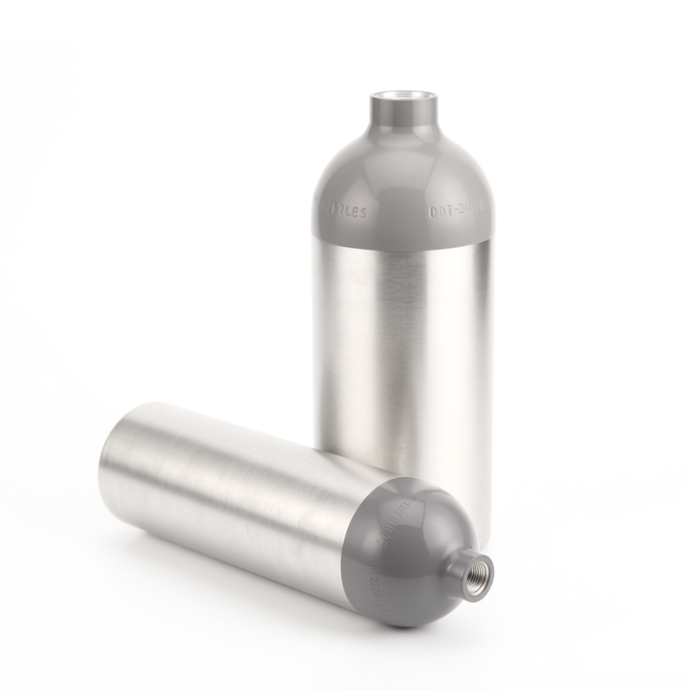
Internal facility transport demands specific, rigid handling procedures. Moving a CO₂ Cylinder from storage to the point-of-use requires immense care. You need proper equipment like dedicated hand trucks or specialized carts. These specific carts must feature built-in securing chains. A simple dolly cannot handle the rounded shape safely.
We enforce one explicit rule across all operations: never drag, roll, or slide them. You should never lift them by the valve or the protective cap. The cap simply protects the delicate brass valve assembly from impacts. It cannot support the massive weight of the steel body.
External or over-the-road transport involves strict federal rules. Vehicle selection matters immensely for public safety. Open-bodied vehicles like flatbeds or open pickup trucks are highly preferred. Enclosed cabins require strict ventilation rules to prevent deadly gas build-up. A small leak inside a closed van turns fatal within minutes.
DOT compliance is fully mandatory for all street transport. Drivers must use proper vehicle placarding and carry correct shipping papers. They also need specific hazardous materials training before turning the ignition. Load securing logic is very straightforward but often ignored. You must strap everything upright directly to the vehicle's structural frame. Bungee cords are completely unacceptable. Standard ropes are equally dangerous. Use heavy-duty nylon ratchet straps exclusively.
Choosing the right management equipment requires balancing scalability against your current needs. Small hospitality venues often only need single tank brackets. Large industrial facilities require heavy-duty manifolds and massive security cages. You must project your operational volume for the next three years. Buy infrastructure capable of handling your future peak capacity.
Material and build quality determine long-term safety and ROI. Look closely at the construction details before purchasing anything. Choose powder-coated steel for maximum corrosion resistance in humid environments. Use heavy-duty nylon strapping featuring industrial-grade ratchets. Select continuous-welded steel chains over cheaper, link-pressed alternatives. Avoid cheap plastic restraints at all costs. Plastic becomes extremely brittle and snaps under heavy loads.
Integrated safety features add a necessary layer of protection. The most effective solutions pair physical storage directly with active monitoring. Look for automated leak detection systems built into the storage area. Emergency shut-off valves also provide crucial fail-safes. They automatically stop the flow of gas during a sudden line rupture.
Thorough vendor vetting protects your entire operation from unnecessary liability. Do not simply buy the cheapest option available online. Evaluate the historical track record of your gas supplier or equipment manufacturer. Ask them directly about their hydrostatic testing procedures. Demand transparent maintenance logs for all rental equipment. Verify their strict adherence to all published CGA standards.
Even the best equipment fails due to simple human error. Staff complacency remains a very real danger in busy facilities. Workers often leave protective caps off after finishing deliveries. They sometimes fail to chain tanks back up after swapping them out. We see these simple mistakes lead to severe accidents constantly.
Inadequate training amplifies these common handling errors. A massive gap exists between buying the right equipment and using it correctly. Does your staff know how to properly use high-pressure regulators? Can they confidently perform a soapy water test to check for tiny leaks? Do they know exactly how to secure the main valves tightly?
You must take direct risk mitigation action immediately. Implement regular facility audits to catch bad habits early. Make handling certifications entirely mandatory for anyone touching the gas supply. Install highly visible safety signage near all storage areas.
Use this simple numbered checklist for your weekly facility audits:
Check all wall brackets for loose masonry anchors.
Inspect every nylon strap for fraying or chemical burns.
Verify hydrostatic test dates stamped directly on the collar.
Test the audible alarms on all enclosed space monitors.
Confirm clear segregation between empty and full inventory.
Clear reminders keep safety protocols top of mind for everyone. Regular enforcement turns abstract safety rules into permanent daily habits.
Standardizing your handling protocols delivers immense business value. It directly protects your employees from severe physical harm. It eliminates costly audit failures entirely. Proper storage also ensures continuous, uninterrupted daily operations. You cannot afford to treat pressurized gas management as an afterthought.
Take immediate action to secure your facility. Conduct a thorough physical audit of your current storage setups today. Identify any missing chains, broken brackets, or unventilated spaces. Reach out to a certified gas equipment specialist to evaluate your specific needs. Upgrade any non-compliant restraints immediately to protect your team.
A: You must strictly store and transport them upright. Horizontal storage causes the withdrawal of liquid CO₂ instead of gas. This liquid instantly damages attached regulators. Upright storage also ensures the pressure relief valve functions correctly. The valve must sit directly in the vapor space to vent gas safely during emergencies.
A: You must store them away from direct heat sources. Ambient temperatures must remain strictly below 125°F (52°C). Exceeding this temperature limit causes internal pressure to spike dramatically. This extreme pressure will cause the rupture disk to burst, dumping the entire contents of the vessel into the room.
A: Yes, if the storage area is enclosed, poorly ventilated, or located below ground level like a basement. OSHA regulations and local fire codes strongly dictate the use of fixed, continuous CO₂ monitors in these specific environments to prevent fatal asphyxiation risks.
A: Always specify the use of a purpose-built cylinder cart featuring a secure restraining chain. We strongly warn against "free-rolling" the vessel on its bottom edge. Only highly trained personnel should attempt free-rolling over very short distances. Proper carts remain the definitive safe standard for all staff.

