
Picture a chaotic intensive care unit. A respiratory therapist has mere seconds to swap a depleted oxygen cylinder. In these high-stakes moments, a jammed handwheel or a missing specialized wrench rapidly escalates into a life-threatening crisis. Patient safety in healthcare facilities relies entirely on the flawless operation of high-pressure containment equipment. A single malfunction or incorrect connection does not just delay treatment. It actively endangers lives.
Healthcare workers and facility procurement managers constantly wrestle with complex, overlapping connection standards. The fundamental challenge lies in navigating the rigid physical fail-safes designed to keep patients safe while maintaining operational efficiency. This comprehensive guide serves as an essential resource for mastering the mechanics, safety compliance, and daily maintenance of a medical gas cylinder valve. By understanding the intricate engineering behind these devices, clinical teams can prevent severe accidents and ensure uninterrupted therapeutic delivery.
Before diving into the mechanical specifics, we must recognize current industry trajectories. Recent market analyses reveal a decisive shift in high-pressure medical equipment design. Facilities are rapidly migrating away from legacy multi-component setups toward smart, integrated containment systems. Modern engineering focuses heavily on reducing caregiver fatigue and minimizing cross-contamination points. Furthermore, the rising demand for lightweight, non-magnetic alloys reflects a broader industry push to make emergency respiratory care faster, safer, and completely foolproof.
Standardized Connections Prevent Errors: Safety frameworks like the Pin Index Safety System and Diameter Index Safety System operate as critical physical fail-safes. They are strictly engineered to prevent a user from accidentally administering the wrong therapeutic mixture.
Safety First: Facility operators must never allow oil, grease, or hydrocarbon-based lubricants near gas control equipment. When exposed to pressurized oxygen, these mundane substances trigger instantaneous, violent combustion.
Regular Inspection is Non-Negotiable: Executing a rigorous pre-use checklist is fundamental. Actively checking for microscopic leaks, damaged connection threads, and missing O-rings extends the equipment lifespan and guarantees patient security.
Choosing the Right Infrastructure: Selecting the correct equipment involves matching Compressed Gas Association standards to your facility specific clinical applications. You must weigh factors like material durability, working pressure, and ergonomic design.
To maintain a secure clinical environment, healthcare professionals must first grasp the foundational mechanics of their life-support equipment. At its core, this highly engineered mechanical device sits at the top of a pressurized tank. It acts as the primary gatekeeper. Its chief function is to safely confine the contents during storage and precisely regulate the release of high-pressure flow into downstream patient delivery systems.
The basic anatomy includes several precision-machined components. The handwheel or toggle allows manual flow control. Deep inside, a spindle and seat mechanism physically obstructs or permits the passage of the pressurized mixture. In addition, a built-in pressure relief device—often a rupture disc—is integrated into the brass body. This safety feature safely vents the contents if internal pressures spike dangerously due to extreme heat exposure or accidental overfilling.
Oxygen is the most frequently administered therapeutic gas in emergency settings. Consequently, the control mechanisms must adhere to uncompromising manufacturing regulations. Oxygen vigorously accelerates combustion. Therefore, these components undergo intense, specialized cleaning processes. Manufacturers strip away all traces of particulate matter, machining oils, and organic contaminants before the hardware ever reaches a hospital. Even a microscopic drop of standard mechanical grease left on the threads can ignite instantly when exposed to the friction of flowing oxygen.
These two components may appear identical to an untrained observer passing by a hospital supply room. However, they feature distinct mechanical differences designed to prevent fatal cross-connection errors. Medical air is a clean, dry compressed atmospheric mixture. It is utilized primarily for respiratory treatments and driving pneumatic surgical tools.
To prevent a technician from mistakenly attaching an oxygen regulator to a medical air supply, regulatory bodies enforce strict mechanical indexing. More importantly, the physical pin configurations machined into the mating faces are entirely different. This engineering choice makes it physically impossible to attach the wrong regulator without intentionally destroying the brass fittings.
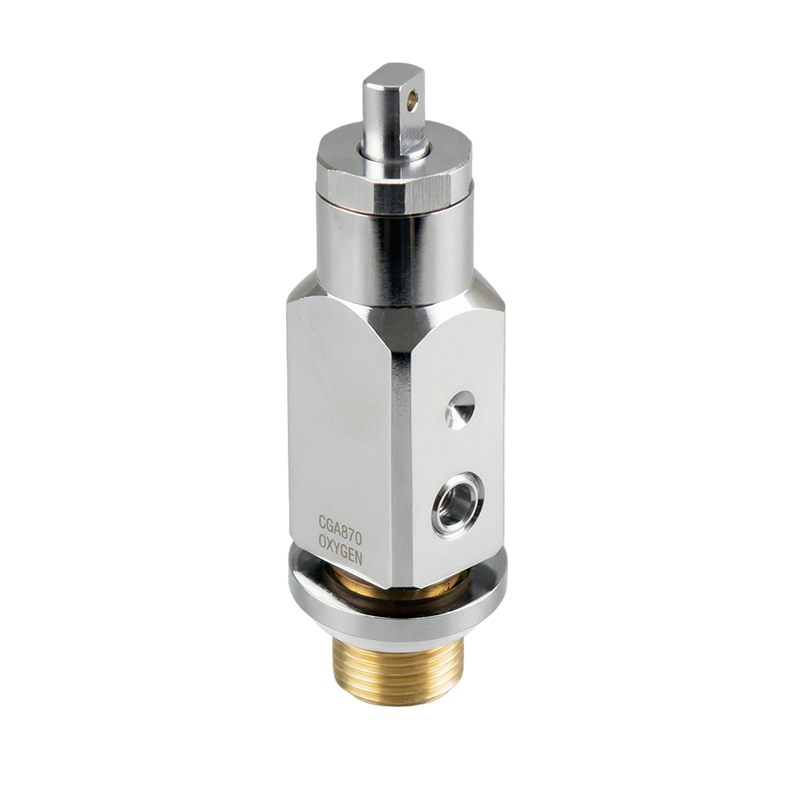
Understanding the diverse architectural designs available on the market is crucial. Procurement managers must make long-term purchasing decisions based on factual engineering data. The specific type of control mechanism selected directly dictates usability, cylinder compatibility, and the overall workflow efficiency of a busy hospital ward.
The standard post design remains the most traditional architecture. It is predominantly utilized on smaller, portable cylinders like sizes A through E. These are often mounted on transport stretchers or wheelchairs. The unit features a flat mating surface with two specific holes designed to interface seamlessly with a yoke-style regulator.
Users operate these via a separate cylinder wrench or a permanently integrated toggle. While the separate wrench system is highly robust and deters unauthorized tampering, modern acute-care facilities increasingly prefer the attached toggle design. This ensures clinical staff can initiate supply immediately during a sudden patient transport crisis. No one wants to frantically search for a misplaced tool during a code blue.
Valves with Integrated Pressure Regulators, commonly called VIPRs, represent a massive technological leap in respiratory care delivery. Unlike standard post configurations that require a technician to manually mount a heavy, separate regulator, a VIPR combines the valve, regulator, flow selector, and pressure gauge into one seamless, protected unit.
This shift is primarily driven by the urgent need to reduce caregiver fatigue and slash setup times during respiratory emergencies. Because the regulator is permanently attached and shielded by a robust carrying guard, the risk of dropping and shattering sensitive internal gauges is virtually eliminated.
Bullnose designs are heavy-duty, threaded components typically installed on massive stationary cylinders such as sizes F, G, H, and J. These tanks are rarely moved. Instead, they serve as the backbone for bulk storage, manifold systems, and central hospital supply lines.
Unlike the yoke connection used on portable units, bullnose designs feature a robust, threaded outlet. The regulator is securely screwed directly onto the fitting using a large crescent wrench. This threaded architecture is specifically engineered to withstand exceptionally high flow rates. It provides the leak-proof seal necessary for continuous, long-term delivery to multiple hospital floors.
The safety of clinical administration relies entirely on complex, standardized indexing systems. These frameworks govern exactly how equipment connects. They ensure that human error in a high-stress environment does not result in the administration of the wrong substance.
The Pin Index Safety System, known as PISS, is a foolproof mechanical safeguard utilized globally for small medical cylinders. The system relies on the exact mathematical placement of two stainless steel pins on the regulator yoke. These pins must perfectly align with two corresponding holes drilled into the face of the cylinder outlet.
If the pins do not align perfectly with the holes, the regulator cannot be seated. The gas will simply not flow. This physical barrier serves as the ultimate defense against cross-contamination. For example, oxygen utilizes pins 2 and 5, while nitrous oxide uses pins 3 and 5.
While the pin system secures high-pressure cylinder connections, the Diameter Index Safety System, or DISS, governs lower-pressure pathways. Engineers typically install DISS fittings on hospital wall outlets, the low-pressure outputs of cylinder regulators, and the hoses connecting to complex ventilators.
DISS utilizes unique thread diameters and pitches for different mixtures. A respiratory hose will possess a specific thread size that physically cannot be screwed into an incompatible wall outlet. This prevents catastrophic errors when respiratory therapists are untangling dozens of lines to connect life-support machinery in chaotic intensive care units.
Biomedical technicians and nurses handle high-pressure cylinders daily. Without strict adherence to empirical safety protocols, these seemingly routine tasks can quickly escalate into hazardous situations involving explosive decompression or fire.
Before attaching any regulator, staff must perform a visual and tactile inspection. Imagine checking a tank in dim hospital lighting. Taking a few extra seconds here saves lives. A standard checklist should include:
Visual Verification: Ensure the cylinder label matches the required prescription. Never rely solely on cylinder paint. Colors can fade or differ by country.
Debris Check: Shine a light into the outlet port. Inspect for dust, lint, or particulate matter. High-velocity flow can propel these particles into the regulator, causing internal mechanical damage.
Seal Inspection: Verify that the Bodok seal—the specialized metal-bound rubber washer used in yoke connections—is present, intact, and free of dry rot. A missing Bodok seal is the leading cause of high-pressure leaks.
The methodology used to open a high-pressure system requires patience and precision. Technicians should employ the cracking technique prior to attaching a regulator. This involves opening the flow very slightly for a fraction of a second to blow out microscopic dust particles resting in the outlet port. Close it immediately afterward.
Once the regulator is securely mounted, you must initiate the flow extremely slowly. Rapid opening causes adiabatic compression. When high-pressure gas rushes into the low-pressure chamber of the regulator, it recompresses the mixture already present. This generates localized temperatures exceeding 1,000 degrees Fahrenheit within milliseconds.
Facility managers must constantly drill into staff that a medical oxygen valve must never come into contact with hydrocarbons. Oil, grease, petroleum-based lip balms, and standard hand lotions act as highly reactive fuels in an oxygen-enriched environment. If adiabatic compression generates heat within a contaminated port, the combination of heat, pure oxygen, and hydrocarbon fuel will result in violent spontaneous combustion. Facilities must ensure that staff handle all respiratory equipment with strictly clean, oil-free hands.
Smart procurement decisions regarding high-pressure control must be driven by technical specifications, material integrity, and regulatory compliance. Initial cost should never be the primary driver. Investing in the correct infrastructure upfront prevents costly operational delays and compliance violations down the line.
The foundational step in procurement is ensuring absolute mechanical compatibility between the inlet threads and the cylinder neck. Furthermore, the outlet connection must precisely match the standard for the specific application. To simplify the engineering specifications, refer to the following actionable selection guide based on industry-standard parameters.
| Application | Typical Standard | Pin Position | Recommended Product Line | Working Pressure |
|---|---|---|---|---|
| Oxygen Delivery | CGA 870 / CGA 540 | 2 and 5 | MDC Series | 15MPa / 200bar |
| Medical Air Systems | CGA 346 / PISS | 1 and 5 | medical air valve (MDD Series) | 15MPa |
The primary construction material determines weight, durability, and suitability for specialized clinical environments.
Forged brass is the heavy-duty industry standard. It boasts exceptional resistance to thread wear and mechanical impact. However, it is considerably heavier. This adds ergonomic burden to portable transport systems.
In contrast, aluminum alloys are significantly lighter, making them ideal for ambulatory care. More importantly, specialized non-magnetic aluminum options are strictly mandatory for use in Magnetic Resonance Imaging suites. In these highly magnetic environments, standard brass containing trace ferrous elements could become a lethal projectile.
The operational lifespan of high-pressure equipment is directly proportional to the quality of the maintenance protocols implemented by the hospital biomedical team. Neglecting routine upkeep degrades mechanical integrity. It exponentially increases the risk of catastrophic failure.
While internal components are generally not field-serviceable, external maintenance is a continuous requirement. Elastomeric components, particularly O-rings and Bodok seals, undergo continuous mechanical stress and chemical degradation. You should inspect these seals daily. Replace them immediately upon showing signs of flattening or cracking.
Additionally, the entire assembly is subject to mandatory regulatory inspections. In accordance with Department of Transportation regulations, medical cylinders must undergo hydrostatic testing every five to ten years. During this process, a certified technician removes the top assembly, mechanically inspects the threads, and often completely refurbishes the unit.
Storage protocols must align with strict fire protection guidelines. Cylinders must always be stored in an upright position. Secure them to a structural wall or heavy-duty rack using chains. A falling cylinder can snap the brass neck off, turning the pressurized tank into an unguided missile.
Separate full and empty cylinders physically. Label them clearly to prevent critical delays during an emergency. Even when a cylinder is considered empty, the handwheel must remain fully closed. This simple step prevents atmospheric moisture and contaminants from entering the tank and causing internal corrosion.
Clinical staff should be trained to identify and resolve basic mechanical issues without compromising safety.
Audible Hissing at Connection: This almost always indicates a degraded or improperly seated seal between the mating face and the regulator. Close the flow immediately. Depressurize the regulator and replace the seal. Never use multiple seals to fix a gap.
Stiff or Jammed Handwheel: This points to mechanical thread damage or overtightening during previous use. Do not use wrenches or excessive force to break it open. Tag the cylinder as defective and return it to the supplier for professional servicing.
Inconsistent Flow: If flow to the patient fluctuates, verify the cylinder is opened sufficiently—usually one full rotation. If the issue persists, the problem likely lies within the attached regulator mechanism. Swap it out immediately.
Proper management of high-pressure containment devices saves patient lives every single day. The margin for error in respiratory care is virtually nonexistent. A thorough understanding of mechanical connections and indexing systems is an absolute necessity for all healthcare professionals and procurement teams.
By executing rigorous pre-use inspections, strictly adhering to anti-contamination protocols, and investing in certified infrastructure, facilities can drastically mitigate the risks of gas leaks and fires. Whether you are outfitting a massive central manifold or a fleet of portable transport stretchers, ongoing staff training and proactive equipment auditing remain your best defenses against catastrophic failure. Take the time today to review your current inventory. Update your safety checklists. If you are looking to upgrade your facility with highly reliable, rigorously tested equipment, explore the MDC and MDD series products from ZXHP Gas to ensure your respiratory infrastructure operates at the highest possible standard.
Absolutely not. The Pin Index Safety System is specifically engineered to make this mechanically impossible. Oxygen utilizes pin positions 2 and 5, whereas medical air utilizes pin positions 1 and 5. Attempting to bypass this system by removing pins or using unauthorized adapters will result in delivering the wrong mixture to a patient. This can lead to fatal hypoxia or oxygen toxicity. Furthermore, forcing incompatible connections will cause irreversible damage to the brass threads and sealing surfaces.
An audible hissing sound invariably indicates a high-pressure leak. In the vast majority of cases involving yoke-style connections, this is caused by a failure of the Bodok seal located between the mating face and the regulator. The seal may be missing entirely, worn flat from repeated use, or cracked. The immediate solution is to close the flow, bleed the pressure from the regulator, and install a brand-new, manufacturer-approved seal. Never attempt to overtighten the regulator to stop a leak, as this will crush the indexing pins.
Standard engineering and clinical practice dictates that you should open the mechanism slowly until it reaches its fully open position, and then turn the handwheel or toggle back a quarter-turn. This practice prevents a back-seated condition. If it is left jammed tightly in the fully open position against its mechanical stop, a subsequent user might mistakenly believe it is closed. If they attempt to force it open further with a wrench, they can shear the internal spindle, rendering the equipment permanently inoperable.
Under normal clinical conditions and with proper maintenance, a high-quality forged brass unit can last 10 to 15 years. However, its operational lifespan is heavily dependent on usage frequency and handling. The internal elastomeric components wear out much faster and require periodic replacement. The entire unit is thoroughly evaluated during the cylinder mandatory hydrostatic testing cycle, which occurs every five to ten years depending on regional regulations.
No. If the external connection threads or the internal cylinder neck threads sustain mechanical damage, the unit cannot be safely repaired in the field. Thread damage compromises the high-pressure structural integrity, creating a severe risk of explosive blowout. Any unit showing signs of cross-threading, severe galling, or impact deformation must be immediately tagged out of service, depressurized safely by a professional, and replaced entirely.


