
Purchasing a CO₂ Cylinder seems straightforward until you face conflicting valve standards, varying purity grades, and strict testing dates. It is easy to buy a tank online, only to find local gas suppliers refuse to fill it. Selecting the wrong tank leads to incompatible hardware, wasted gas, and rejected refills. It also introduces potential safety hazards into your home or workplace. High-pressure gas storage requires precise hardware matching to ensure safe, leak-free operation. This guide provides an objective, technical breakdown to help you navigate these choices. We will help you evaluate capacity, compatibility, and compliance requirements. You will learn how to select the exact carbon dioxide tank for your operational scale or home setup. We cover everything from commercial beverage carbonation to industrial hydroponics.
Application dictates grade: Always verify if your use case requires Food/Beverage-grade purity vs. Industrial-grade.
Hardware compatibility is absolute: Ensure the cylinder’s valve (e.g., CGA-320, Pin Valve) matches your regulator; adapters introduce leak risks.
Scale determines sizing: Balance upfront cylinder costs against the frequency and logistical downtime of local refilling or exchange programs.
Safety is regulated, not optional: Cylinders require periodic hydrostatic testing (typically every 5 years) to remain legally refillable.
Defining your end-goal dictates the baseline requirements for your gas storage. You must consider the cylinder material, gas purity, and valve configuration. A mismatch here ruins equipment or compromises end-product quality. We categorize requirements based on four dominant applications.
Commercial beverage dispensing demands high-volume, reliable gas output. You must use Food-Grade CO₂. The internal material of the cylinder matters significantly here. Aluminum is the industry preference. It prevents internal rust. Rust alters beverage taste and creates foamy pours. If you use steel tanks, they must undergo special internal treatments. For continuous draft systems, reliability is critical. You want a CO₂ Cylinder robust enough for regular commercial transit.
Planted aquariums require hyper-precise flow control. Aquascapers often measure output in bubbles per second. You are usually constrained by narrow cabinet space under the tank. Your evaluation focus should be regulator compatibility and form factor. Most high-end aquatic regulators use the CGA-320 standard. You need a tank perfectly matched to this valve. Adapters often fail under constant pressure, leaking gas into your living room.
Countertop carbonation machines prioritize space-saving designs. They rely heavily on proprietary thread compatibility. For example, SodaStream uses a specific TR21-4 valve. This differs entirely from standard paintball or commercial valves. Many consumers try using unverified third-party adapters to connect larger commercial tanks. This approach risks voiding warranties. It also bypasses built-in safety mechanisms designed for consumer protection.
Industrial applications require a high-volume continuous draw. Welders and commercial growers consume gas rapidly. Industrial-grade gas is acceptable here. Your primary evaluation focus shifts to bulk availability. You need maximum capacity. Aesthetics and food-safe internal coatings do not matter. The goal is moving large volumes of gas efficiently.
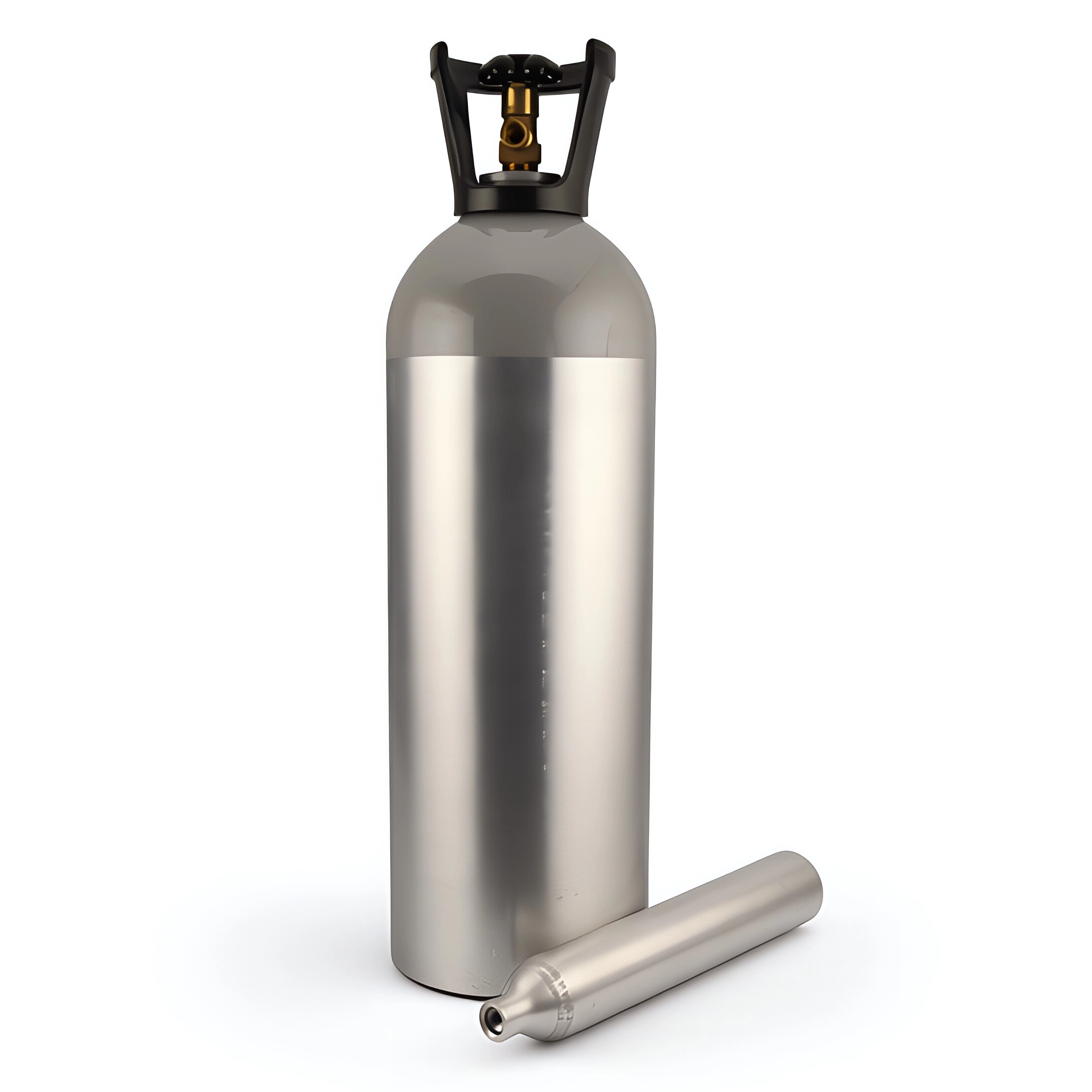
You must balance physical footprint constraints against your operational consumption rates. Buying a massive tank reduces refill trips but introduces severe transport challenges. Buying a small tank fits beautifully in a cabinet but frustrates you through constant depletion.
These ultra-compact tanks serve specific niche roles. They are best for nano-aquariums, countertop carbonators, and low-volume portable dispensing. Their main advantage is portability. However, they carry significant limitations. You pay the highest premium for the gas itself. Frequent replacement becomes a major hassle. They often use pin valves requiring specific micro-regulators.
The mid-range tier is the undeniable sweet spot for most hobbyists. They are best for standard planted tanks and home kegerators. A standard 5lb tank reliably dispenses roughly 10 to 15 half-barrel kegs. From a logistics standpoint, they shine. You can easily and safely transport a 5lb or 10lb CO₂ Cylinder in a passenger vehicle. Local brew shops happily exchange them.
Large operations require industrial-scale storage. These tanks are best for high-turnover bars, commercial greenhouses, and industrial applications. You face several risks and considerations here. These tanks are extremely heavy. A full 50lb tank weighs over 100 pounds. You generally require commercial delivery contracts. You also need strict indoor ventilation compliance. A sudden leak from a 50lb tank in a closed room displaces oxygen rapidly, creating a lethal hazard.
Cylinder Size | Empty Weight (Approx.) | Primary Application | Transport Difficulty |
|---|---|---|---|
24 oz | 1.5 lbs | Portable dispensing, nano-aquariums | Very Easy |
5 lb | 7.5 lbs | Home kegerators, standard aquariums | Easy |
20 lb | 25 lbs | Small bars, large grow rooms | Moderate (Requires care) |
50 lb | 100+ lbs (Full) | Industrial, high-volume commercial | High (Commercial delivery) |
Navigating the physical and chemical requirements of your setup prevents costly mistakes. You must understand how your hardware connects and what quality of gas flows through it.
Hardware standards vary wildly across industries. The North American standard for commercial CO₂ regulators is the CGA-320 valve. It features a flat face connection. It absolutely requires a nylon or Teflon washer to form a proper seal. Forgetting this washer guarantees a massive leak. Pin valves are common on paintball-style tanks. They require specialized micro-regulators to depress the internal pin. Proprietary threads dominate consumer carbonation brands. They deliberately limit your refill options to authorized brand exchanges.
Many beginners make a dangerous assumption. They believe all CO₂ is identical. Reality dictates otherwise. Food-grade CO₂ guarantees a minimum 99.9% purity. Facilities test it rigorously for benzene, ammonia, and other unsafe particulates. Industrial gas skips these stringent tests. We strongly recommend you never use industrial-grade gas for human consumption. It is equally unsafe for sensitive aquatic ecosystems. Impurities harm fish and alter water chemistry.
Your local supply chain heavily influences your operational routine. You must decide whether to exchange your empty tank or have it manually refilled. Each path presents distinct advantages and hurdles.
Exchanging your tank works exactly like swapping a propane tank for a grill. You hand over an empty tank and receive a full one. The pros are obvious. You experience zero maintenance downtime. You never worry about hydrostatic testing because the supplier handles compliance. Turnaround is immediate. The cons often frustrate enthusiasts. You lose ownership of your shiny, brand-new aluminum tank. You almost always receive a scuffed, older steel tank in return.
Refilling allows you to maintain possession of your exact hardware. The pros appeal to meticulous owners. You keep your specific cylinder. Refills often cost less per pound than exchanges. However, you face several cons. You must wait while a technician fills the tank. You also remain legally responsible for maintaining 5-year hydrostatic testing certifications.
You should approach refill stations with a skeptical eye. Use this checklist to verify a proper fill:
Ask if they use a pump system or rely on pressure equalization.
Verify if they chill the tank first. Cold tanks accept more liquid gas.
Weigh the tank afterward. Pressure gauges cannot verify a full liquid fill.
Incomplete pressure-equalized fills leave you with half a tank of gas, despite paying full price.
Gas storage demands respect. CO₂ rests inside the tank as a liquid under extreme pressure. At room temperature, this pressure hovers around 800 to 1000 PSI. Mishandling your CO₂ Cylinder poses severe physical and asphyxiation risks.
The Department of Transportation (DOT) in the US and Transport Canada (TC) enforce strict testing laws. Standard regulations require hydrostatic testing every 5 years. Facilities engrave the test date directly into the cylinder's metal crown. You must heed this actionable advice: never buy a used cylinder without checking the last stamped date. Expired tanks are useless. Reputable fillers reject them instantly. You will have to pay out of pocket for recertification before anyone fills it.
Orientation matters immensely. Always store and operate CO₂ cylinders strictly upright. Operating them horizontally invites disaster. Horizontal placement allows freezing liquid CO₂ to enter the regulator. This causes catastrophic freezing, destroys internal diaphragms, and triggers violent gas releases. You must also control the storage environment. Keep tanks away from direct heat sources. Cylinders feature a built-in burst disk. This disk ruptures safely to release gas if internal pressure exceeds safety limits due to extreme heat expansion.
Selecting the right cylinder streamlines your entire operation. Base your shortlisting logic on three rigid pillars. First, define your required gas purity, separating food applications from industrial ones. Second, lock down your regulator valve compatibility. Finally, evaluate the most convenient local refill or exchange options in your immediate zip code.
Take action before finalizing any online purchase. Call two local gas suppliers, such as a welding supply store or beverage distributor. Confirm their specific connector requirements. Ask about their policies on filling outside tanks. Planning your logistics upfront prevents frustrating delays and ensures your system runs safely and efficiently.
A: No, you should not use a fire extinguisher for standard CO₂ applications. Fire extinguishers utilize a siphon tube (dip tube) inside the tank. This tube draws liquid CO₂ from the bottom to extinguish fires. Standard regulators require gaseous CO₂ from the top. Using an unmodified extinguisher pushes freezing liquid into your regulator, destroying it instantly.
A: Aluminum is vastly superior for beverage and aquatic applications. It remains rust-free even if moisture backflows into the tank, protecting taste and water quality. Aluminum is also significantly lighter, making transport easier. Steel is heavier and prone to internal rust, but it is often cheaper and highly durable for industrial environments.
A: You must weigh the tank. A pressure gauge is highly misleading. Because CO₂ is stored as a liquid, the internal pressure remains stable at around 800 PSI until every drop of liquid vaporizes. Once the gauge drops, the tank is already empty. Subtract the stamped Tare Weight (TW) from the current total weight to find remaining gas.
A: Yes, keeping a small to mid-sized cylinder indoors is generally safe, provided you follow standard ventilation practices. Ensure the room has adequate airflow. CO₂ is heavier than air and pools near the floor during a leak. Avoid keeping large commercial tanks (50lb+) in small, unventilated closets, as severe leaks pose an asphyxiation risk.

