
Anyone who has ever dealt with high-pressure gas systems understands the dread of a sudden, catastrophic leak. Imagine setting up a sophisticated commercial beverage manifold or meticulously tuning a planted aquarium, only to hear the unmistakable hiss of escaping gas. A single faulty connection easily ruins an entire setup. Choosing the wrong valve architecture inevitably causes dangerous pressure failures. In this comprehensive engineering guide, you will explore the intricate world of valve types, rigorous safety standards, and proven connection methods. Mastering these components forms the absolute foundation of building a reliable, leak-free pressurized system.
Identify Your Standard: The CGA 320 standard serves as the primary connection interface for carbon dioxide cylinders throughout North America. Unlike many other gas fittings, it strictly requires a dedicated flat washer to establish a secure seal.
Safety First: Modern consumer-grade refillable bottles frequently utilize a specialized self-closing mechanism. This engineering design prevents accidental high-pressure discharge when the cylinder is abruptly disconnected from its regulator.
Washers are Non-Negotiable: Hardware designed for inert gases, such as Argon or Nitrogen, often employs tapered metal-to-metal seals. Carbon dioxide equipment generally does not use this method. A nylon or Teflon washer is mandatory to prevent gas from escaping under intense pressure.
Global Variations: Thread specifications differ significantly across global regions. Standards such as DIN 477 in Europe or BS 341 in the United Kingdom dictate that operators may require specific, pressure-rated adapters if mixing international equipment.
Maintenance Matters: Regularly inspecting your hardware for thread wear, replacing sealing O-rings, and verifying the integrity of the burst disk significantly extends the operational life of your refillable gas bottle.
Before evaluating specific connection types or purchasing adapters, understanding the structural anatomy and mechanical function of a standard carbon dioxide control apparatus is essential. When you crack open a fresh tank, these components endure intense physical forces. They must meet rigorous engineering specifications to prevent catastrophic blowouts in your workspace.
A standard industrial or commercial control mechanism consists of several critical components. Engineers meticulously craft each part to manage high-pressure gas safely.
Valve Body: The main structural housing is typically forged from heavy-duty brass. Forging aligns the metal grain structure, providing superior tensile strength to withstand extreme internal pressures. These pressures often exceed 800 PSI at room temperature. The forging also resists the freezing temperatures caused by expanding gas.
Handwheel: This is the external knob utilized by the operator to manually open and close the internal flow mechanism. It attaches to a stem that moves a precision sealing plug inside the brass body.
Outlet Connection: The threaded external interface where the pressure regulator, distribution manifold, or refill adapter securely attaches to the cylinder.
Dip Tube: An optional but critical internal component. Configurations equipped with dip tubes draw liquid carbon dioxide from the bottom of the cylinder. This setup is necessary for refilling smaller tanks or operating theatrical special effects equipment. Conversely, configurations without dip tubes draw gaseous carbon dioxide from the top, serving as the standard setup for beverage dispensing and aquarium systems.
Unlike standard compressed atmospheric air or nitrogen, carbon dioxide is stored inside the cylinder as a compressed liquid that boils into a gas at normal room temperatures. This phase change from liquid to gas absorbs massive amounts of thermal energy from the surrounding environment. During high flow rates, this rapid heat absorption causes the brass body to drop in temperature significantly. Frost or solid ice often accumulates on the exterior. A specialized SCA Series CO2 cylinder valve is explicitly engineered to resist freezing, maintain its structural integrity under severe thermal cycling, and handle the pressure spikes associated with ambient temperature fluctuations.
Recent market analysis regarding refillable gas bottle connections reveals a distinct shift toward high-cycle reliability and user-centric safety. As commercial systems scale down for home use—particularly in sparkling water makers and precision nano-aquariums—the industry is rapidly moving away from single-use disposable cartridges. Consumers demand sustainability. Consequently, manufacturers are prioritizing robust, tool-less connection mechanisms and integrated safety relief systems.
This prevailing trend underscores the critical importance of durable architectures that can withstand thousands of refill cycles without compromising seal integrity. Modern engineering now focuses on advanced self-sealing technologies and standardized burst disks, ensuring that everyday users can handle high-pressure gases with industrial-level safety. Furthermore, regulatory bodies are tightening material compliance, pushing manufacturers toward high-purity forged brass to eliminate the porosity issues commonly found in cheaper cast alternatives.
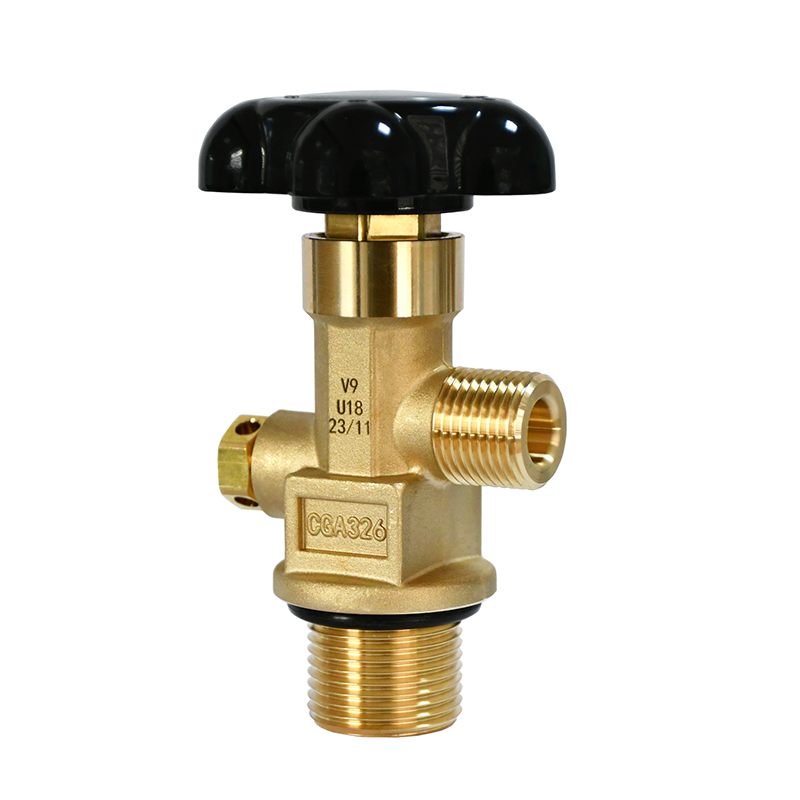
For operators purchasing a standard refillable carbon dioxide bottle within the United States or Canada, the cylinder will almost certainly be equipped with a CGA 320 valve. Established by the Compressed Gas Association, this standard ensures uniformity and safety across industrial, commercial, and consumer applications.
The standard dictates precise physical dimensions to prevent the accidental connection of incompatible, potentially dangerous gas types. Specifically, the connection utilizes a 0.825-14 NGO thread specification. It features right-hand threads, meaning the regulator is tightened by turning it clockwise. The cylinder outlet features a male thread. Consequently, the corresponding regulator nut features a female thread that screws over the outlet.
The most distinguishing mechanical feature is its flat sealing face. In contrast to the connections used for inert gases, which rely on a tapered metal-to-metal connection, this standard relies entirely on a flat mating surface to trap the high-pressure gas.
Because of the flat-face engineering design, this specific connection absolutely requires an external washer to sit between the outlet and the regulator stem. Without this compressible component, high-pressure gas will immediately leak from the connection. This creates a loud hiss and a severe safety hazard.
Never use two washers simultaneously in an attempt to fix a stubborn leak. Stacking washers creates an unstable sealing surface and drastically increases the likelihood of a high-pressure blowout. Field technicians always replace a washer if it exhibits visible signs of crushing, cracking, or tearing.
While industrial handwheel configurations remain standard for large cylinders, consumer-grade and highly portable applications require a different approach. The CO2 self closing valve has become increasingly prevalent due to its passive safety features and user-friendly design.
Unlike a traditional manual handwheel that requires deliberate physical rotation to secure the gas flow, this modern alternative remains permanently sealed via an internal spring-loaded mechanism. The outlet contains a central pin. It only permits gas flow when a compatible regulator or filling adapter is threaded onto the housing. This action physically depresses the internal pin against the spring tension. Once the regulator or adapter is unscrewed, the internal spring instantly snaps the sealing mechanism shut, trapping the remaining high-pressure gas safely inside the cylinder.
This specific architecture is deployed across several distinct industries, including home sparkling water systems, recreational paintball tanks, and miniature aquarium setups. The primary engineering advantage is the elimination of human error. It removes the risk of a user forgetting to manually close a handwheel before disconnecting a high-pressure regulator. In addition, the instantaneous shut-off mechanism prevents the accidental venting and subsequent financial loss of gas during the attachment and detachment processes.
Global supply chains mean that operators frequently encounter equipment manufactured outside their home region. North American standards are not universal. Attempting to force incompatible threads together will permanently destroy the brass body and create a severe safety hazard.
DIN 477 No. 6: This is the primary regulatory standard across Germany and the majority of the European Union. It features a W21.8 x 1/14 inch thread specification. While it may visually resemble North American hardware to an untrained eye, it utilizes a slightly different sealing face and thread pitch.
BS 341 No. 8: The official British Standard utilizes a thread size specified as 0.860 inch x 14 TPI. It is mechanically distinct from both the European DIN standard and the North American CGA standard.
JIS B 8246: The Japanese Industrial Standard utilizes a 22mm right-hand thread, engineered to meet specific seismic and thermal regulations unique to the Japanese domestic market.
Always verify the manufacturing origin of your pressure regulator and your refillable gas bottle. Utilizing digital calipers to measure thread diameter and a pitch gauge to verify threads-per-inch is highly recommended when the origin of the equipment is unknown.
Handling compressed gases involves inherent physical risks. Pressures exceeding 800 PSI contain massive amounts of potential energy. Fortunately, modern engineered hardware includes mandated, built-in failsafes to protect life and property.
Every globally certified refillable gas bottle features a burst disk integrated directly into the brass housing. If a cylinder is accidentally overfilled, or if it is exposed to extreme environmental heat, the internal liquid will expand rapidly. This causes a severe pressure spike. Before the structural limits of the aluminum or steel cylinder are breached, the engineered copper or alloy burst disk will rupture safely between 2,800 PSI and 3,000 PSI. This action vents the expanding gas harmlessly through directional exhaust ports.
A leaking system is not merely a financial drain due to wasted gas; it poses a legitimate safety hazard. Diagnosing and resolving these issues requires a systematic, empirical approach rather than guesswork.
The industry-standard method for identifying gas leaks is the liquid leak detection test. Professionals recommend using specialized, chloride-free leak detection fluids to prevent stress corrosion cracking on brass components. Pressurize the system and apply the detection fluid generously over all connection points. A rapid formation of large bubbles indicates a severe, high-pressure leak. A slow accumulation of a white, foamy lather points to a micro-leak.
The most frequent point of failure occurs at the interface between the cylinder and the primary regulator. If the required washer is omitted, crushed from over-tightening, or brittle from age, a leak is inevitable. Depressurize the system, remove the regulator, and replace the washer with a new Teflon gasket. Ensure the mating surfaces are completely free of debris before re-tightening.
If bubbles emerge from directly beneath the handwheel assembly, the internal packing material has likely failed. A proven troubleshooting technique is to back-seat the mechanism. By opening the handwheel fully until it stops, you engage a secondary metal-to-metal seal inside the housing. This action often isolates the packing gland and stops the leak. If the leak persists, the internal packing nut requires professional servicing.
Selecting the appropriate hardware requires matching the engineering specifications to the exact demands of your application. Purchasing incorrect hardware leads to equipment incompatibility, operational inefficiency, or severe safety risks.
| Product Series | Actuation Type | Working Pressure | Best Use Case | Key Engineering Feature |
|---|---|---|---|---|
| GVB Series | Manual Handwheel | Up to 150 Bar | Commercial Beverage, Kegerators, Large Aquariums | Heavy-duty forged brass body; extremely high cycle life. |
| SCA Series | Spring-Loaded Pin | Up to 150 Bar | Sparkling Water Makers, Nano-Aquariums, Paintball | Instantaneous self-closing mechanism; prevents accidental venting. |
Beverage carbonation requires carbon dioxide in its gaseous state. Standard configurations draw gas from the top of the cylinder. For bustling restaurant environments, empirical data suggests that utilizing forged brass manual handwheel configurations provides the necessary durability to withstand frequent regulator changes and mechanical stress.
Space is often limited in home setups. Planted aquariums require extremely low, precise flow rates. A self-closing, pin-actuated architecture is highly efficient here. The quick-disconnect nature allows users to swap cylinders in seconds without needing heavy wrenches, making it ideal for under-sink cabinets.
A properly manufactured brass unit can theoretically operate for decades, but its internal components are subject to wear, fatigue, and chemical degradation. Standard refillable gas bottles are legally required to undergo hydrostatic testing every five years. During this rigorous process, the testing facility will completely depressurize the cylinder and remove the brass housing. Technicians inspect the inlet threads for galvanic corrosion, replace the burst disk assembly to prevent fatigue-induced premature ruptures, and install a new internal packing O-ring before applying fresh thread sealant and re-torquing the system.
Navigating the mechanics of refillable gas bottles requires precision and respect for high-pressure dynamics. By thoroughly understanding the engineering behind your pressurized system, you ensure a secure, leak-free setup for any commercial or residential application. Whether you are wrenching down a heavy-duty dual-gauge regulator onto a traditional connection with a fresh Teflon washer, or leveraging the quick-release safety of a modern spring-loaded mechanism, the key is prioritizing routine maintenance. Always verify your thread standards, never skip the liquid leak detection test, and invest in high-quality forged brass hardware. For operators looking to upgrade or replace their current setups, selecting precision-engineered products from trusted manufacturers like ZXHP Gas ensures your systems run smoothly and safely for years to come.
Yes, a washer is absolutely mandatory. Unlike tapered pipe threads that wedge together to form a seal, this specific standard features a completely flat face. Without a nylon or Teflon washer seated between the cylinder and the regulator nut, high-pressure gas will immediately escape through the microscopic gaps between the flat metal surfaces.
The connection should be tightened firmly with a proper wrench, typically requiring about 40 to 50 foot-pounds of torque. You want to compress the nylon or Teflon washer enough to create a gas-tight seal, but not so hard that you crush or deform the washer. Hand-tightening is never sufficient for this type of flat-faced, high-pressure connection.
No, you should never operate a standard carbon dioxide cylinder on its side. Because the cylinder contains liquid CO2 at the bottom and gaseous CO2 at the top, laying it horizontally will allow extremely cold liquid to enter the regulator. This will instantly freeze and destroy the internal diaphragms of the regulator, causing a catastrophic pressure failure.
Freezing is a direct result of thermodynamics, specifically the Joule-Thomson effect and the latent heat of vaporization. When the compressed liquid rapidly expands and transitions into a gas as it exits the cylinder, it absorbs a massive amount of heat energy from its immediate surroundings. This rapid heat absorption causes the brass and attached regulator to drop to sub-zero temperatures, freezing ambient humidity out of the air.
These two standards are engineered for entirely different classes of gases and are mechanically incompatible to prevent dangerous mixing. The 320 standard is specifically designated for carbon dioxide, features a right-hand thread, and requires a flat washer to seal. Conversely, the 580 standard is designated for non-reactive, inert gases like Argon and Nitrogen. It utilizes an internal, rounded metal-to-metal seating face that requires no washer.
The heavy-duty forged brass body of a premium unit easily lasts for 15 to 20 years if it is not subjected to severe physical impact or cross-threading. However, the internal wearable components degrade over time. Industry best practices dictate that these internal components should be inspected, and the burst disk replaced, during the cylinder's mandatory 5-year hydrostatic testing cycle to ensure continued safe operation.


