
Selecting the right material for your gas storage is more than a simple pricing decision. It directly impacts your daily operational flow, portability requirements, and ongoing regulatory compliance. Whether you are scaling a commercial beverage program, outfitting a busy welding shop, or setting up a reliable homebrew system, choosing the wrong tank material carries serious risks. You might face premature hydro-test failures, hidden product contamination, or frustrating logistical headaches at local supply depots. A mismatched tank often leads to unexpected downtime. This guide breaks down the structural, functional, and logistical differences between aluminum and steel options. We will help you navigate these critical variables clearly and objectively. You will gain the exact insights needed to make a fully informed procurement decision.
Weight & Handling: Aluminum cylinders weigh up to 40% less than steel, drastically reducing physical strain for mobile setups and kegerators.
Corrosion Resistance: Aluminum resists internal and external rust, making it the standard for high-moisture environments (like food and beverage), whereas steel requires strict moisture control to prevent degradation.
Durability & Cost: Steel offers superior impact resistance for harsh industrial environments and typically comes with a lower upfront acquisition cost.
The Exchange Factor: Your local gas supplier’s refill vs. exchange policy should dictate your purchase; buying a premium aluminum tank is wasted if your supplier only offers mixed-material tank swaps.
Understanding the core differences between metals helps you predict how a tank will perform in your specific environment. Engineers design each material type using unique fabrication methods. These methods dictate the final weight, strength, and corrosion resistance of the vessel.
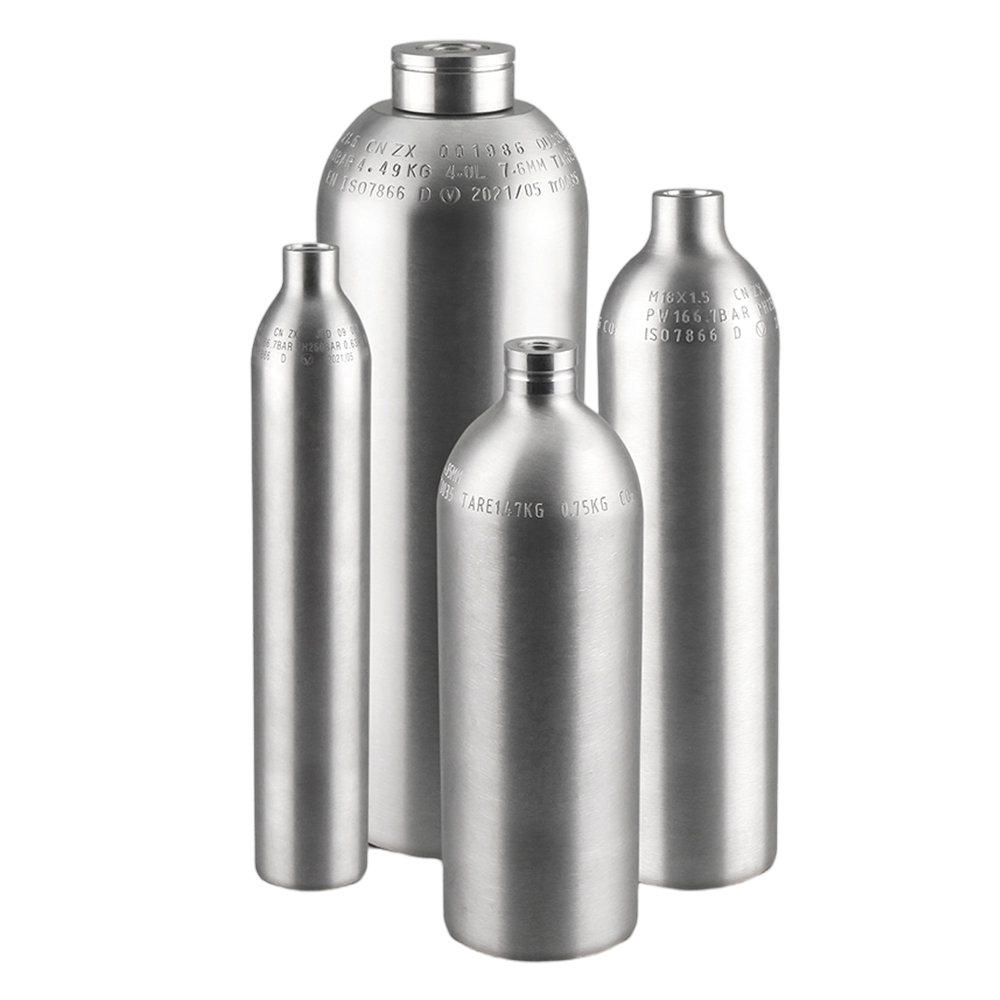
Manufacturers craft aluminum tanks from high-strength alloys. They predominantly use the 6061-T6 specification. This specific metal behaves uniquely when exposed to air. It naturally forms a tough, protective oxide layer on its surface. This layer acts as an invisible shield against deep structural corrosion. When you lift a modern CO₂ Cylinder made of aluminum, you immediately notice the lighter physical footprint. It holds the exact same gas capacity as heavier alternatives but drastically reduces physical strain during transport. You can maneuver these lighter tanks easily during busy shifts or tight installations.
Fabricators typically spin steel tanks from solid carbon steel billets. This material boasts an exceptionally high tensile strength. High strength allows manufacturers to design walls thinner than their aluminum counterparts. However, the sheer density of the metal results in a much heavier overall tare weight. Carbon steel remains highly susceptible to oxidation. If you expose it to atmospheric moisture or standing water, rust forms rapidly. This rust can spread both inside and outside the vessel if you ignore routine maintenance.
Despite their physical differences, both materials must pass stringent regulatory standards. In the United States, they require Department of Transportation (DOT) certification. In Canada, they need Transport Canada (TC) approval. Both types utilize standard CGA 320 valves for gas distribution. This universal valve standard is highly beneficial. It means your existing regulators remain universally compatible regardless of the tank material you choose. You never need to purchase separate aluminum or steel regulators.
Matching the material to your daily environment prevents premature equipment failure. Some industries prioritize cleanliness, while others demand brute physical toughness.
Cleanliness, portability, and rust prevention serve as the primary success criteria for beverage dispensing. Aluminum wins decisively in this sector.
Kegerators, commercial draft systems, and walk-in coolers are inherently damp environments. Condensation constantly drips down the sides of cold equipment. Steel tanks sit in these puddles and quickly form dark rust rings on your floors or inside your refrigerators. Aluminum completely solves this messy problem. More importantly, aluminum ensures no internal rust scale flakes off into your sensitive beverage lines. It protects the flavor profile of your beer, soda, or sparkling water. For mobile event bartenders or homebrewers, the lighter weight also makes swapping tanks much less exhausting.
Impact resistance, high-volume capacity, and cost-efficiency dictate success in industrial settings. Steel takes the lead in these rugged environments.
In fabrication shops, mechanics frequently bump, knock, or drag tanks across concrete floors. Agricultural grow operations expose tanks to abrasive tools and heavy machinery. Steel offers sheer physical toughness. It withstands severe external impacts better than softer aluminum alloys. Additionally, industrial users often require massive gas volumes, relying on large 50-pound tanks. The lower manufacturing cost of steel makes these large-capacity tanks highly practical and budget-friendly for heavy-duty facilities.
| Application Scenario | Primary Threat | Recommended Material | Key Reason |
|---|---|---|---|
| Commercial Bars & Kegerators | Condensation / Moisture | Aluminum | Prevents rust rings and internal contamination. |
| Mobile Event Catering | Physical Lifting Strain | Aluminum | Weighs up to 40% less for easy transport. |
| MIG/TIG Welding Shops | Blunt Force / Impacts | Steel | Superior tensile strength withstands shop abuse. |
| Large Scale Agriculture | High Procurement Volume | Steel | Lower initial acquisition pricing at massive scale. |
Every gas cylinder requires periodic safety evaluations. You cannot legally refill a tank indefinitely without proving its structural integrity. Understanding these maintenance intervals helps you anticipate future operational hurdles.
Safety agencies mandate strict testing schedules. Both aluminum and steel cylinders legally require hydrostatic testing every five years. During this test, technicians fill the tank with water and pressurize it beyond its normal operating limits. They measure how much the metal expands. If the metal stretches too much and fails to return to its original shape, the tank fails the test. Facilities must then condemn and destroy the failed vessel.
Steel tanks are significantly more prone to failing these mandatory hydro tests. Failure usually occurs when moisture backs up into the cylinder. Beverage carbonation systems frequently suffer from this issue. If you operate a draft system without proper one-way check valves, liquid can slowly creep up the gas line. Once moisture enters a steel tank, internal rust develops rapidly. This rust eats away at the structural wall thickness. When the five-year test arrives, the weakened steel walls expand too far, resulting in immediate condemnation.
Aluminum handles these minor moisture intrusions far better. The protective oxide layer stops internal pitting before it threatens the wall thickness. Because they resist rust so effectively, aluminum tanks yield much higher hydro-test pass rates over a 10-to-15-year horizon. You completely avoid the need for expensive internal rust-abatement tumbling treatments. Steel might offer a cheaper entry price, but you must factor in the higher risk of premature condemnation due to rust.
The most critical step in evaluating a cylinder purchase happens before you ever look at a product catalog. You must know exactly how you will refill your gas. The implementation reality often dictates your purchase entirely.
Gas suppliers generally operate using two distinct fulfillment models. Understanding your local supplier's model prevents costly purchasing mistakes.
The Exchange Model (Tank Swaps): Many distributors only offer "tank swaps." You hand them an empty tank, and they hand you a full one directly from their existing inventory. If your supplier uses this model, do not over-invest in a brand-new aluminum tank. You might trade in your pristine, lightweight tank and receive a scratched, heavy steel tank in return. You lose your investment instantly.
The Fill-While-You-Wait Model: Some local welding shops or fire extinguisher service centers offer direct refills. You hand them your specific tank, they fill it on a scale, and they hand the exact same tank back to you. If you have access to this service, buying a premium, lightweight aluminum tank becomes highly recommended. You retain ownership of your specific hardware.
You must confirm these logistical details early. Call your local gas depot and ask about their turnaround times for direct fills. Ask if they accept both materials in their exchange pool. These answers will steer your final decision.
Making the final choice requires a systematic look at your daily operations. You need to weigh physical demands against environmental threats. Use this evaluation framework to finalize your decision.
Assess Mobility Needs: Think about the physical journey of your equipment. Will you move the tank weekly between event spaces, or will it remain chained securely to a single warehouse wall? If you face constant mobile lifting, choose aluminum. If it stays stationary, steel works perfectly.
Evaluate the Environment: Look at your storage area closely. Is the room climate-controlled, or does it suffer from heavy condensation and humidity? If the area remains damp, aluminum prevents messy floor stains. Dry environments safely accommodate steel.
Analyze the Budgeting Scale: Consider your volume. Are you buying a massive fleet of 50 or more cylinders for a large industrial facility? When upfront capital runs tight at a high volume, steel provides necessary relief. For single purchases, the price difference remains minimal.
Use this simple matrix to tally your needs. Award 1 point to the material that best matches each operational requirement.
| Operational Requirement | Point for Aluminum | Point for Steel |
|---|---|---|
| Frequent lifting and transport required | 1 | 0 |
| High risk of blunt force impacts | 0 | 1 |
| High moisture or beverage dispensing | 1 | 0 |
| Supplier forces blind tank exchanges | 0 | 1 |
| Supplier offers direct exact-tank refills | 1 | 0 |
Next-Step Action: Call your local gas distributor before ordering any hardware online. Confirm their specific refill policies. Ask about their hydro-testing fees. Verify whether they accept both steel and aluminum vessels for exchange. Once you map out their rules, you can purchase with total confidence.
Neither material stands out as universally superior. The right choice depends entirely on your daily operational environment and your local refill logistics. Aluminum thoroughly dominates the food, beverage, and hobbyist markets. Its natural corrosion resistance and low weight make it the perfect companion for damp, mobile applications. Conversely, steel remains a rugged, highly resilient staple for heavy industry, welding, and large-scale agriculture.
Audit your specific use case against the constant threat of moisture. Honestly evaluate the physical abuse the tank will endure. Most importantly, verify the exact reality of your local gas supplier's exchange program. By aligning your hardware with these real-world conditions, you will eliminate frustrating maintenance delays and keep your operations running smoothly.
A: Both are equally safe when properly maintained and hydro-tested every 5 years. Neither material is prone to spontaneous failure under normal operating pressures (approx. 800-900 PSI at room temperature). Safety depends entirely on proper handling, secure storage, and regular inspection rather than the base metal.
A: Yes. If a backflow of liquid (like beer or water) enters the tank, or if filled with low-grade, moisture-rich gas, steel tanks will rust internally. This internal degradation weakens the walls and remains a leading cause of mandatory hydro-test failure.
A: Yes. In North America, both aluminum and steel CO₂ cylinders use a standardized CGA 320 valve. Any standard regulator will thread onto both materials seamlessly. You do not need different hardware to switch between tank materials.
A: Yes. The tare weight (TW) is permanently stamped on the crown of both aluminum and steel tanks. Commercial fillers rely on this specific number. It tells them exactly when the vessel has reached its safe maximum gas capacity by weight.

